Latest Posts

“what is precious…”

This was entry for the Cheongju Craft Biennial in Korea:

suffice it to say I did not win ;(

The theme for the competition was: (you can skip this part if you want.. a little long winded!)

The theme for the 2009 Biennale, Outside the Box, proposes that craft be considered or approached as a composite whole, rather than as a series of fragmentary and contending disciplines. To think outside the box, as the phrase goes in the West, is to transcend spurious divisions through the human faculty of imagination. In newly-merged artistic and managerial discourses, ‘outside the box’ is where the indispensably ‘innovative’ is to be found. But it is also where a state of integration becomes attainable; where meetings become possible. As what is devised as a necessary means to an end, craft and innovation have ever been one and the same. By the same definition craft is integration; with nature, with others, with its collective self. It therefore has the power to unite and represent all human values, in the here and now. It is one of the chief absurdities of our times that the world should be facing unprecedented environmental, economic and humanitarian crises and at the same time find itself inundated with products and consumables.The position in relation to crafts, and the fate of crafts, is one essential aspect of this paradox. Contemporary attitudes to material culture: the idea of the self as project the creation of the authentic individual the arbitrariness of meaning; these have proceeded from the beginnings of modern consumerism in the eighteenth century, and from the development of Romanticism as an intellectual and emotional response.1 But to what vision of mankind does this proliferation of the inherently valueless testify in our information and technology age.

My entry:

In this world where diamonds and pearls are stripped from nature to adorn humans as priceless baubles; it is time to seek out treasures derived from renewable resources such as natural fibres like silk and wool. It is time to reconsider what is precious and priceless.

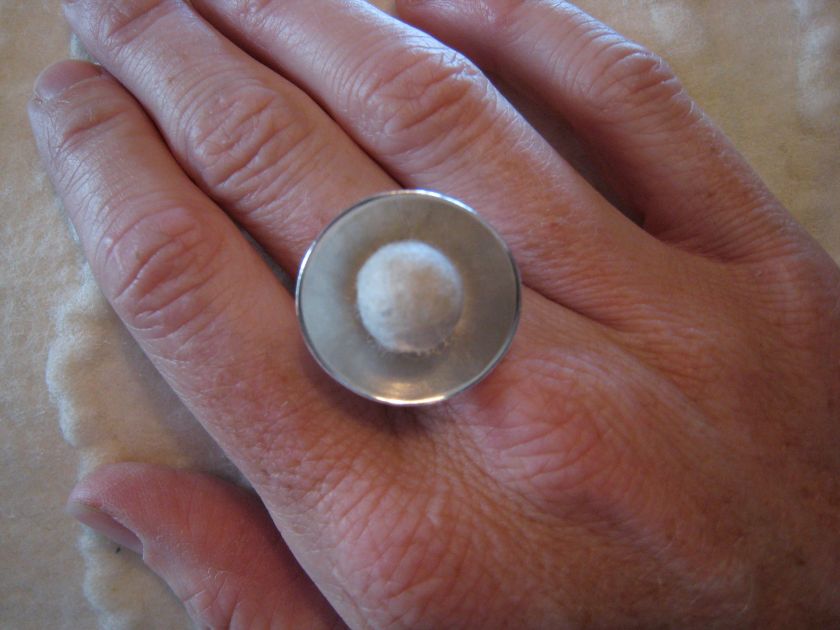
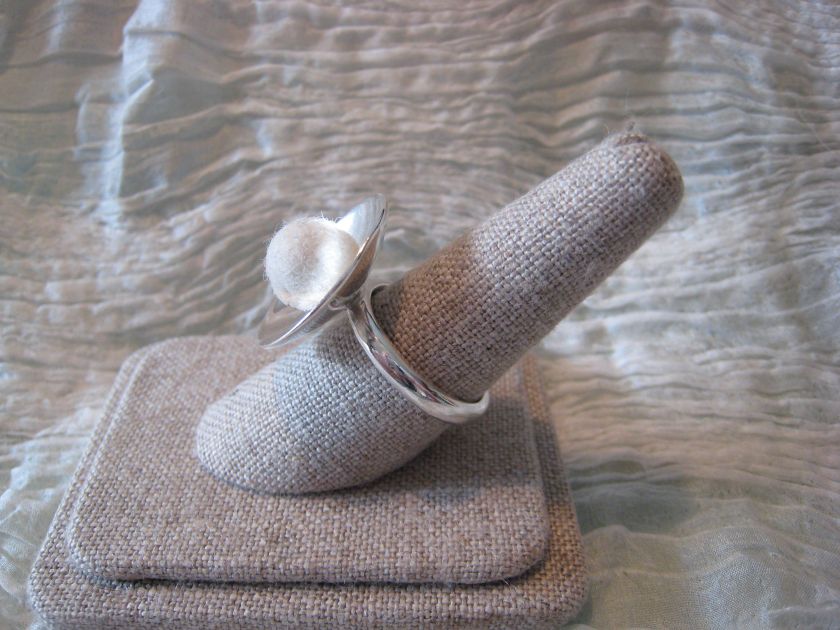
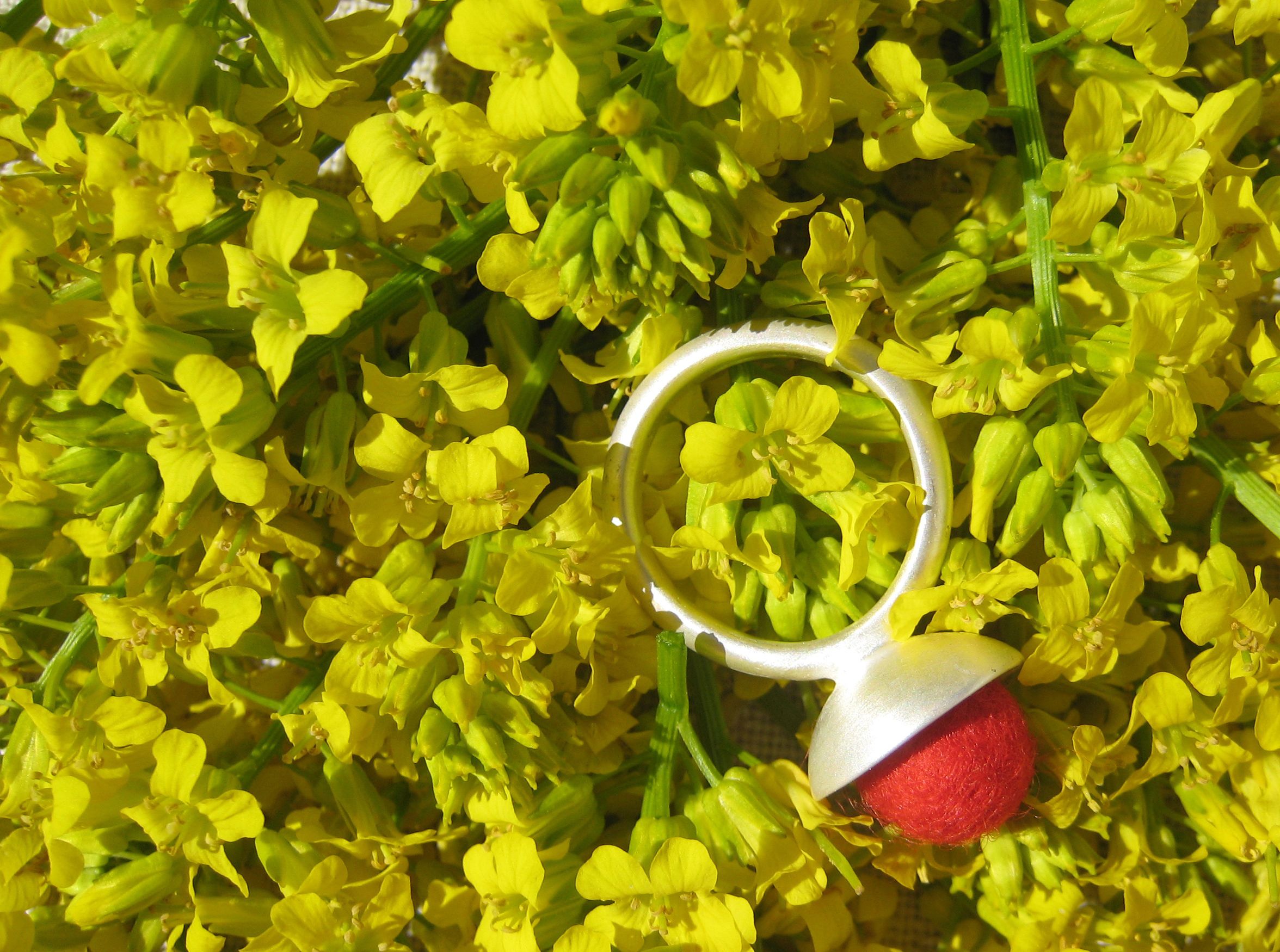
This fine silver ring (.999FS hallmark) with its hand- sculpted and polished finish was designed to enhance and reflect the natural beauty and luster of this hand felted “pearl”; making this “pearl” as precious as any of its ocean counterparts.

This unique ring was inspired by the United Nations declaration that 2009 is the International Year of Natural Fibres.

Felt Pearl Ring

Felt Pearl Ring

Felt Pearl Ring

Felt Pearl Ring

Since making this ring, I have been working on a series of pieces for a new line.

note: the size and colour of the pearls can be custom ordered. I will be posting these on etsy in the not do distant future.

Here is a preview:

cups, saucers, shells and bowls...
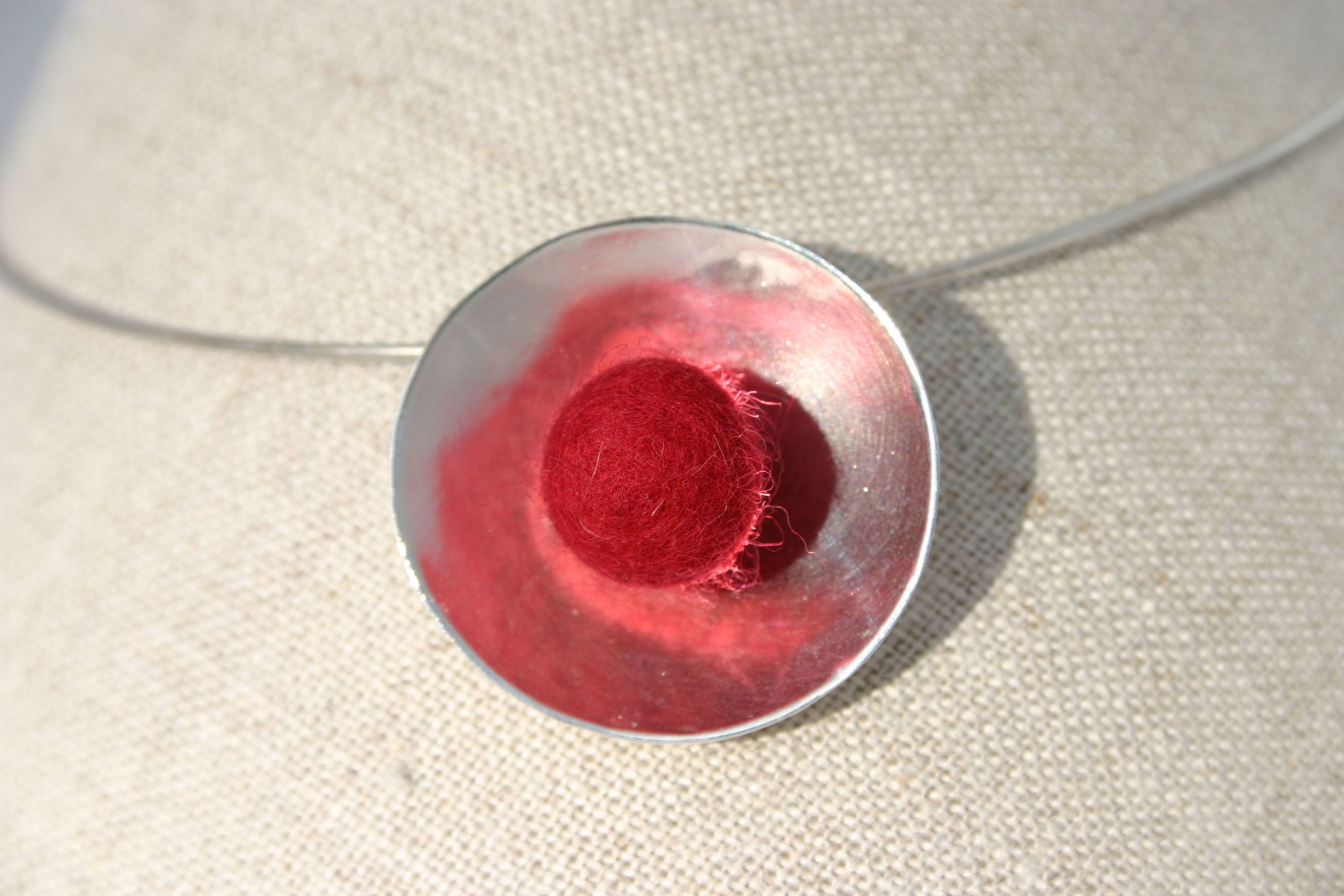
cups, saucers, shells and bowls...
cups, saucers, shells and bowls...

cups, saucers, shells and bowls...

cups, saucers, shells and bowls...

cups, saucers, shells and bowls...

cups, saucers, shells and bowls...
cups, saucers, shells and bowls...

cups, saucers, shells and bowls...
cups, saucers, shells and bowls...
Etsy.. the handmade movement

Etsy.. the place to buy all things handmade

If you do not know what Etsy is (actually in Norway, it is relatively unknown), welcome to the land of the living and take a look. Over a hundred thousand artists showcase their wares for the world to see, and everything you see there is either handmade or vintage. Etsy offers artists not only a fantastic opportunity to expand their market, but it is also a very special place to meet like minded people who appreciate and/or create handmade works. If you are an artist, do look into the community and forum pages, they are excellent resources, with information on marketing, photography and more.

I have been featured on the front page of Etsy on a few occasions, it never ceases to make me feel proud when something I made with my own two hands is chosen for one of their coveted front page spots.

etsy front page featuring my "linen pendant"
etsy front page featuring my “linen pendant”
etsy front page featuring my "bark ring"
etsy front page featuring my “bark ring”

I have been fortunate enough to have been contacted by people looking for that “something special”…. such as a Texan gentleman who was looking for a special “linen” gift for his wife on their 4th anniversary – the “linen” anniversary. She now proudly wears one of my  silver linen pendants. A woman in Boston who was getting married wrote to me, she needed a shawl to wear with her wedding gown. Knowing that what one does – what one dreams of and then creates – goes on to become a cherished piece… something that becomes part of the story of someone’s life is a great feeling. Making/giving handmade gifts – there is just no comparison.


sharing ones knowledge

The creative process is often a solitary one. Meeting other artists – sharing your experiences and techniques… being free with your knowledge – it is important! Mark my words.

I have met many an artist and craftperson over the years, some of whom keep their knowledge locked away, never divulging their secrets. Potentially afraid that once told, that the knowledge would lose its value, becoming part of the “common knowledge” per se. Others have been open, freely telling the how’s and why’s of what they do. I have come to learn that what goes around comes around.

I remember once asking a fellow artist how she accomplished a certain task. She said it was her secret, and that sharing it was not an option. She said she had spent many years learning her craft, and could not tell. I left feeling quite perplexed… yet all the more determined to find a way to do the deed regardless. After many an hour researching online (something I spend way too much time doing), I found a device that would potentially revolutionize my work in that medium. So excited, and sure that my friend had never seen or heard of this little product, I ordered one for myself, as well as one for my friend. When they arrived, I giddily went over like a child with a new toy.. saying “I got one for you too!!!”  smiling ear to ear. – Well… it had never occurred to me that this little device was the secret that she had been keeping. I think we both learned something that day.

Yes, some will say that one needs to guard ones secrets, especially if that artist makes a living by teaching or writing books. I am not saying offer a free workshop to anyone who asks, but sharing ideas, talking about techniques, letting people know about that little tool that makes all the difference.  Any artist worth their salt knows that even in a workshop, where students do their best to create a copy of the example. Even based on a step by step plan, it is rare to see anything come close to the original when it comes to attention to detail and experience.

I attended a workshop here in Norway a few  years back (I am self-taught having only ever attended three felting workshops – such is life when you have small children!). I was amazed by the freedom in which this teacher shared her knowledge. Answering questions and allowing the students to pick at her brain. It was so refreshing – not once did we hear “ohh.. you will have to come to another workshop to learn that” but instead, she told us everything she could, and then some. Sitting around over a cup of coffee, brainstorming on new concepts and talking about the “what if’s” of felting. It made me want to come back for more. One thing that surprised me more than anything, was when I asked about her mistakes.. “what were some of the things that just did not work?” – Well she disappeared for a few minutes only to return with a large suitcase. She opened it up and showed us all of the pieces that just “did not work”.. WOW! Who does that? Yes, we all make disastrous things every now and then – no matter how much we hate to admit it. (Mine often up up in the toy box as padding for the doll bed etc..) But this artist was willing to let us learn from her mistakes, something that is often more informative than one can imagine. I admire her greatly for her attitude, and have learned more from that workshop than from any other I have attended.

My advice to you all.. be free, share your knowledge – you will gain more than you give, and it is a wonderful circle that never ends.

Musings – Collaborative work

Collaborative work – in doing the research for the Metal Clay Master Registry, I read about 2 of the requirements for acquiring a Master V accreditation. 2 collaborative works must be submitted. 

1. Active collaboration – work with someone else to develop a piece that benefits from the contributions of both people.

2. Passive collaboration – buy, swap or in some way acquire a work made by another artist (living or dead — do not kill them for it!). The first step is to come to understand the work of the original artist, then to augment or collaborate with those intentions to complete the piece. (wearable, functional or sculptural)

There are so many benefits to  doing collaborative work. You open yourself up to new possibilities and ways of thinking. It is an opportunity to broaden ones horizons, learning anything new from techniques to understanding a new frame of mind. Whether you collaborate with your neighbor, or an artist you met online who lives on the other side of the planet, you will surely grow from the experience.

Last year, my neighbor and I worked on a collaborative project that we are both quite proud of. We entered a design competition. We did not win by the way! But we did have a fantastic time and have both grown from the experience. The entire process, from designing a good product (within the contest specifications), including sourcing of materials, creating prototypes, branding, packaging and writing a marketing plan together was incredible. 

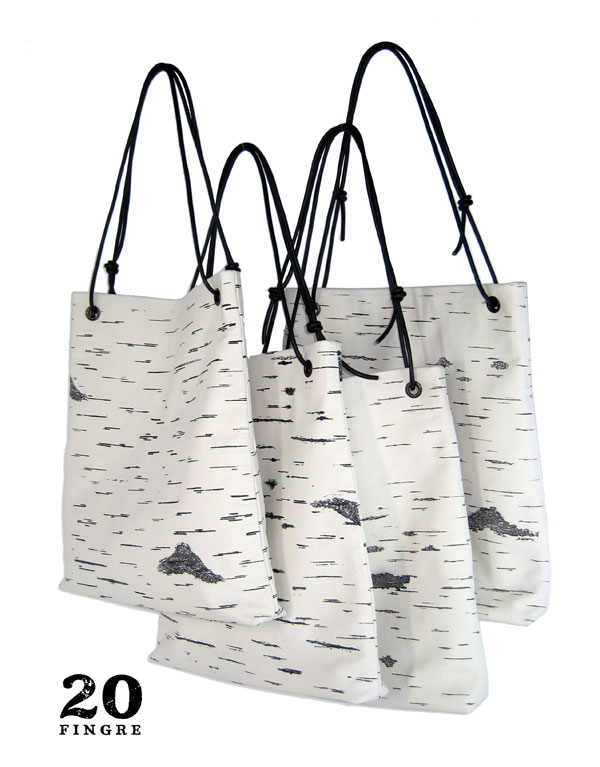
emmaserieswith-logo

We worked on everything from creating a brand name: 20 FINGRE (20 fingers in norwegian), wholesale sourcing of cow hides (do we have a story about a road trip and a barn! haha!), working with a variety of silkscreening techniques and pattern testing (the final pattern was hand drawn by yours truly), we even created prototypes in different models, sizes and colours. It was a limited production run, they have all been sold, and I cherish the one that I kept for myself. I use mine all the time.

A great benefit should you collaborate with someone who is living in another area of the world, you can both benefit by exhibiting the work which means that you get exposure  in a location that would, until now, have been an unlikely venue.

I am always open to new projects, if you are an artist who would like to collaborate on a piece or limited series, feel free to send me a proposal. – no, it does not need to be a formal thing.. just email me your thoughts, keep it casual!

studio today – felt pearl ring tutorial

alright, my finished piece is exactly like I hoped it would be. Creatively, nothing makes me happier than that. To imagine and create. 

From IMAGINE to CREATE… there are a lot of steps between those two words. In my last post, you saw an image of this ring going into the kiln. For those of you who are curious, here is what happens after it comes out.

blogring2111

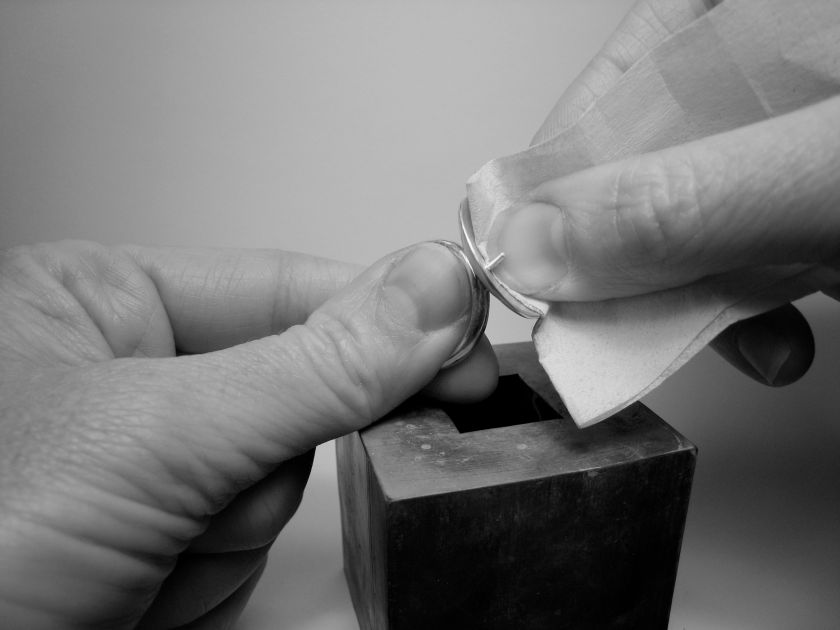
First a good brushing with a soft brass brush with soap and water. After drying, I use a series of progressively finer polishing papers (3M brand – 6 stages 1-30 micron) getting into all of the grooves is the tough work. A rotary tool with polishing discs is an alternate method, but I have found that there is no comparison to working by hand.

Wow.. my wrist looks exceptionally disproportionate in that light..blogring212

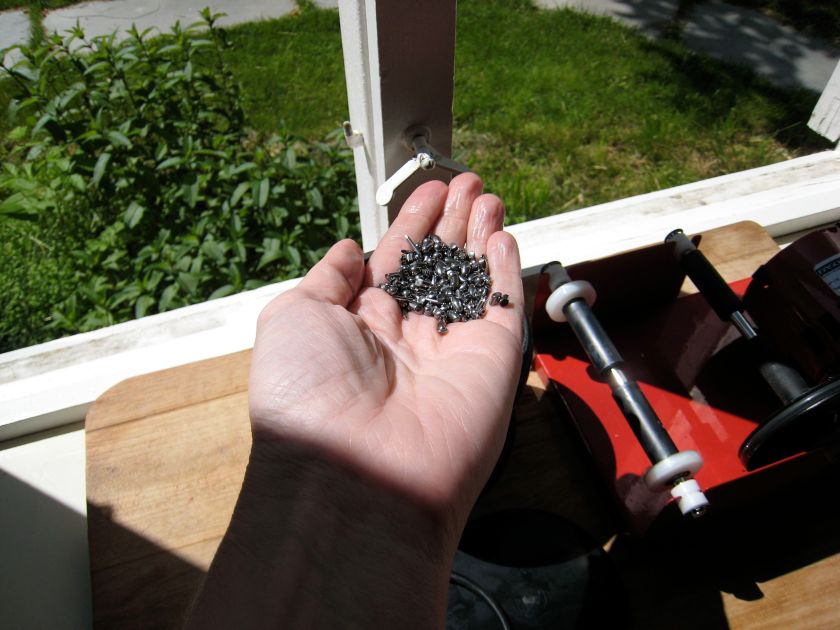
Next, using a variegated mix of stainless shot, let it tumble for a while. How long will depend on the piece. Experience will guide you. Tumbling will polish, but more importantly work harden your silver. One day I will write about this topic: how on a molecular level, metal crystals react to heat and pressure and realign when subjected to work hardening or annealing. (I know.. it is more than most of those reading really want to know!) well for now, just know that by tumbling in a rotary tumbler, this piece will be harder and sturdier than had I not taken this step!

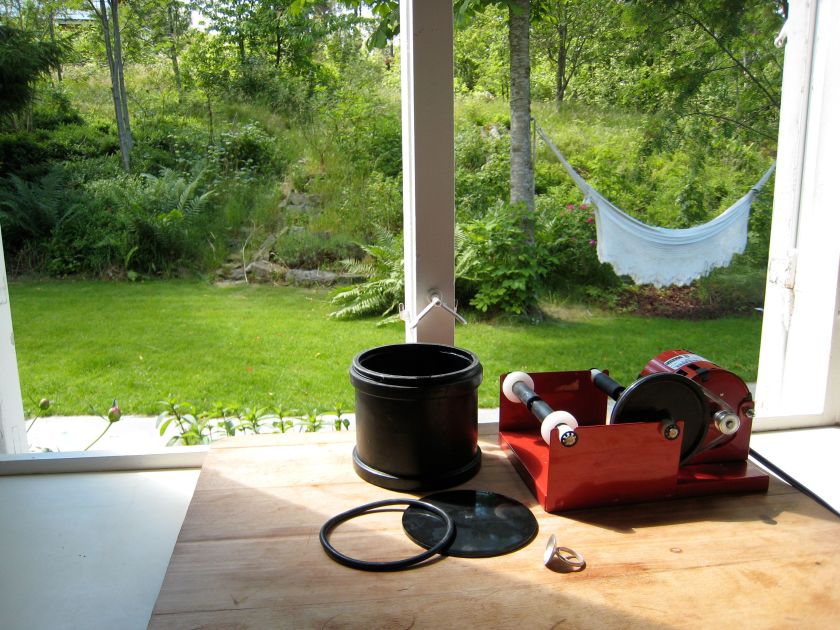
blogring211Here is the ring and my tumbler.
  • Ring gets place into container with stainless shot and polishing solution,
  • cover goes on
  • rubber gasket around container to seal the lid (and my fingers.. not easy to get that piece on!) 
  • place container on rollers 
  • and then the important part.. see that hammock in the garden, grab a good “how to book” lay back  with a cup of coffee and learn something new while relaxing to the rhythmic sounds of your tumbler.  

Once all is said and done, after checking and rechecking, clean and rub with a jewelers rouge cloth to polish. Read my tutorial on making a felt pearl and attach!

Voila! I really love how the mirror finish on the silver reflects the felt and light. In person, it has an almost mother of pearl quality to it.


blogring214

Warning: The hand in the following photograph has been put through rigorous tests, hence the wear and tear and scars from studio mishaps. Owning this ring will not cause this to happen to your hand. Attempting to duplicate or copy this design will!

blogring216

I am a happy artist. I hope you enjoy what you see.

blogring215

the studio today – inside the kiln

Another ring in the works… 

blogring2kiln

This is a photo of my next piece in the kiln. The ring is sitting on a bed of vermiculite and some fibre blanket for support. I make plugs out of investment (powder that is mixed with water and then set – here is the brand I use) in the correct size such that the ring will be a specific size once I am done. This one is made size 8 1/2 (American sizing – to convert click here)

I own a Paragon Xpress E-14A it is such a fantastic piece of equipment. I did a ton of research before choosing my kiln and this one will allow me to move on in other forms and media including glass fusing/slumping, ceramics (I do silkscreening and have a serious set of custom dishware patterns in my head), enameling as well as lampwork beads (I chose the option of a beaddoor) because I know myself… It is just a matter of time! I am reasonably well versed in all of these techniques, I just need to find the time to focus on each one. I do not see myself getting bored anytime in the near future!

This ring is one that I am really looking forward to seeing when it is done. The “bowl” is as wide as the band, and will make a quite striking and bold statement. In the center of the bowl, is set a prong that will support a felt pearl. I have not yet decided on the size or colour, but I think this time the finish on the ring will be polished. Stay tuned.

Accreditation as a feltmaker

I have long pondered the concept of proper credentials regarding feltmaking. The topic recently came up on Pat Sparks feltlist .

I work in a variety of media, and have seen this issue come up many times, each craft having its own levels of quality and skill requirements. As an example, the latest arena to come up with a plan on accreditation, is the metal clay world. Metalsmiths have been taken aback by the growth, first scoffing at the idea of comparing their work as metalsmiths to claywork. But over time, even recognized metalsmiths have delved into metal clay due to its ability to create pieces that would be unattainable or laborious using traditional techniques. It grew faster than one could dream and work of every quality has hit the market. They needed to take the time to come up with an accreditation program (they call it the Masters Registry). I think they have done a good job. It is much more complex than the felting world would ever need. The overall concept of requiring applicants to send in pieces to be judged on quality, while also covering a breadth of techniques is a good start. Theirs is a brand new system, that has yet only registered a handful of Masters – time will tell if it is successful, but I have heard a lot of rumblings of people working on applying.

I think the felting world could use something in the same fashion to establish a quality minimum for someone to mark their credentials as an accredited Feltmaker. We have all seen felt sold that is below standard. I must be honest and say that when I first started selling pieces, they were not nearly as well felted as the pieces I make now. I shudder to think about how they have fared. Only time and experience can really teach you what makes good felt. It is in this light that I think we must look at what we hope for from accreditation. A Master class – is, in my opinion not the right way to go. Not everyone can travel to a given location, those who can , may take the class, and still not make good felt. It is not a viable solution, nor available to all.

A system that anyone can apply to is important, regardless of their location, or association affiliations. This should also be an anonymous application such that no biases are formed prior to judging. That is easily done, and exceptionally important. There should be a fee associated with applying. The work of managing the accreditation process is not an easy one, and there needs to be a solid structure behind this behemoth of a task. Once accreditation is issued, there should be an ability to acquire certain items that would be of use to a qualified feltmaker – ie.. labels for your work, information leaflets that talk about felt and your accreditation in the field, logos and website links, discounts at supporting fiber suppliers who could potentially provide financial support to the accreditation system in exchange for advertising etc. My head is absolutely spinning with ideas. 

A jury of recognized leaders in the field is needed to establish a groundwork for what constitutes good felt, as well as what techniques are needed to be mastered before one can receive accreditation.  This jury would ideally not be judging the style of the pieces submitted, but the quality of the work and knowledge of the craft.

– Is it made with the correct fiber for its purposed use?  such as fine wool for shawls, coarse wool for rugs etc..) is it evenly laid out? etc..

Should a series of categories be set out, with applicants having the option of sending in pieces for say 3 out of 5 potential categories? Does this cover enough breadth to establish a skill in the craft? How many pieces are needed? what categories?.. some examples..

– flat pieces with exposed edges – must be even and uniform, no cut edges

– hollow forms (resist project) 3D without sewing (clothing or vessels, purses etc)

– needlefelting – how does this fit in?

Is creativity a requirement?

Does ones own design carry more weight?

Who can judge the beauty of a piece?

Beauty is in the eye of the beholder, but Skill?!?.. well ..felt that looks good is not always good felt.

Is this a job for the IFA? good question.. maybe a topic for the AGM in Italy next year? The fact that there is an annual gathering of some of the world best felters could make for an excellent venue to do a once a year selection to a FeltMaster Registry. My only concern being that one does not need to be a member of the IFA in order to apply for accreditation. 

I would very much like to hear people thoughts on this topic. Thank you for taking the time to read mine.

*** an excerpt from my comments on the list regarding this topic added June 17, 2009 ***

Do I consider myself a qualified feltmaker? Would I make the grade being judged by a panel of experts in the field, potentially not… I do not know, it is not for me to say. Quite honestly it would be very intimidating to send my work in. It is in taking these steps that one grows as an artist. One must try in order to succeed (failure? always an option!). But what I would hope for in the experience of applying for the credentials, would be some specific constructive criticism of the work sent in that would allow me to focus on my weaknesses and grow in order to apply again once my skills have evolved.

the workbench today – felt pearl earrings

feltpearlearrings2


I love when things fit together!

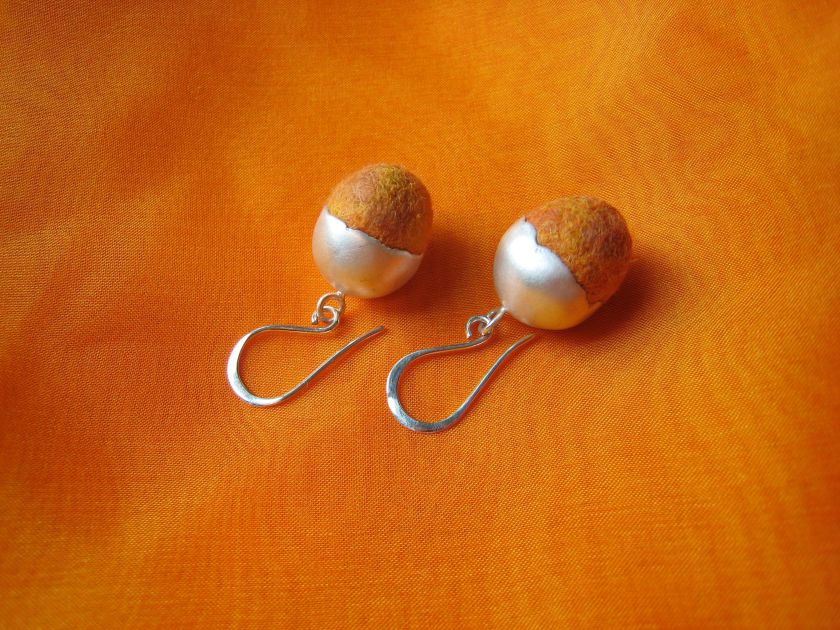
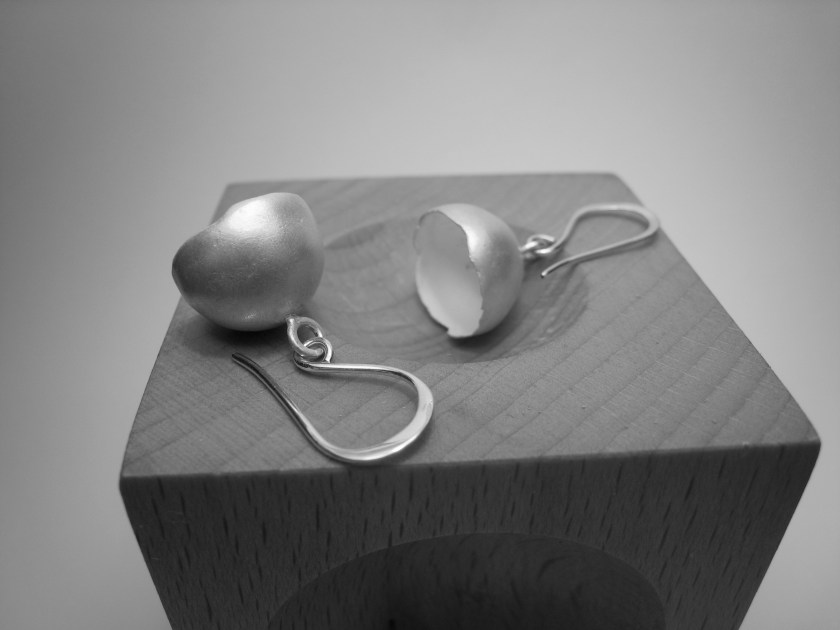
For those of you who have been following this blog, you know that I am working on a line of felt & silver jewelry. This is the prototype for a series of earrings. I am quite pleased with how they turned out. 

feltpearlearrings1

New versions of these will include different finishes with pearls available in custom colours and natural.

See my last post for a tutorial on how to make the “pearls”.

Have a great weekend!

the workbench today – “felt-pearls” tutorial

“Felt-pearls” you say? . They are precious.

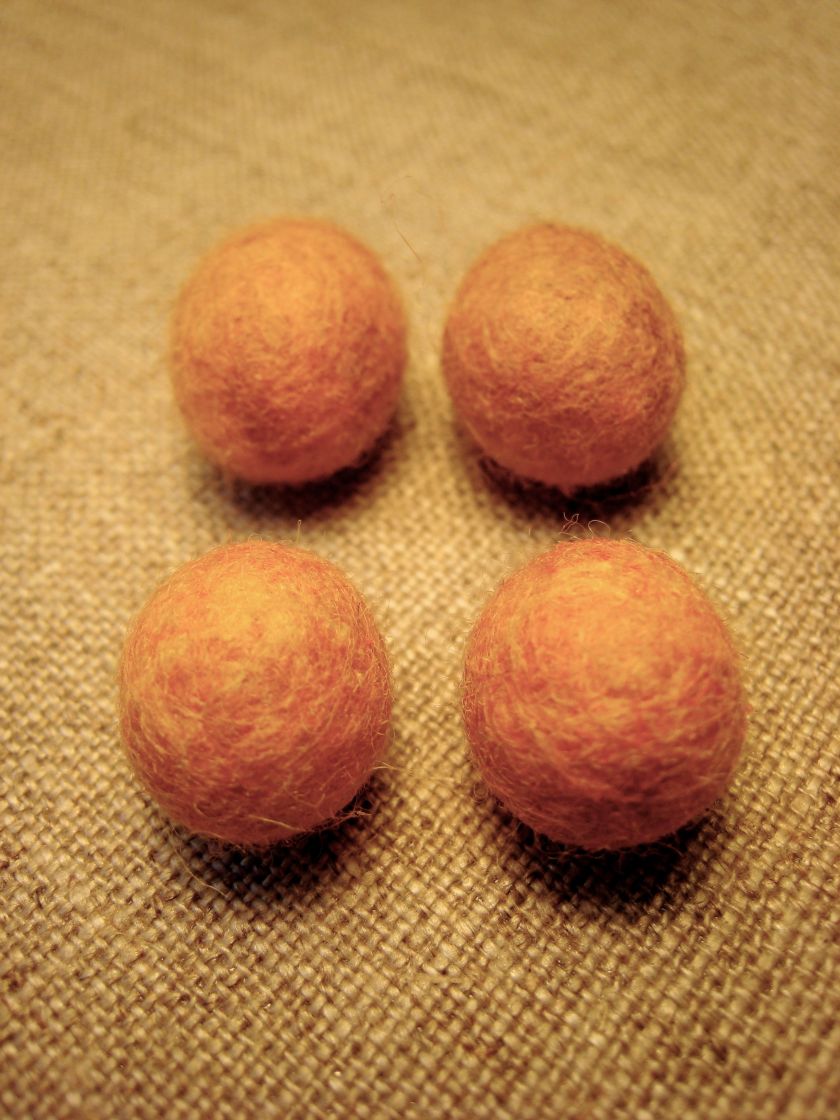
To make felt-pearls, you need a little tender loving care, wool/silk, soap and water.

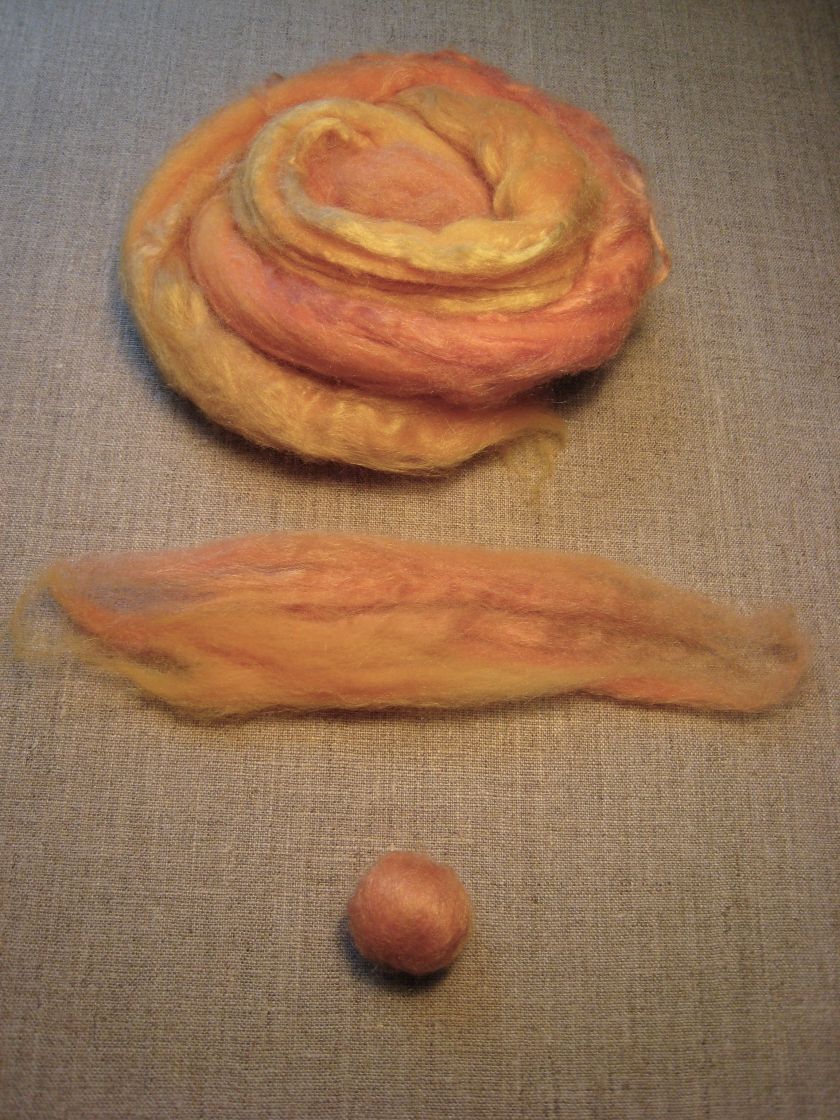
Find yourself some delicious merino wool, mixed with a touch of silk. This batch is hand dyed by yours truly..

feltpearltutorial1


If you are planning to make matching pearls, make them at the same time, using equal amounts of wool. The amount of wool you use will determine the size of your pearl. Experience will teach you  that only trial end error will help you get it right almost every time!

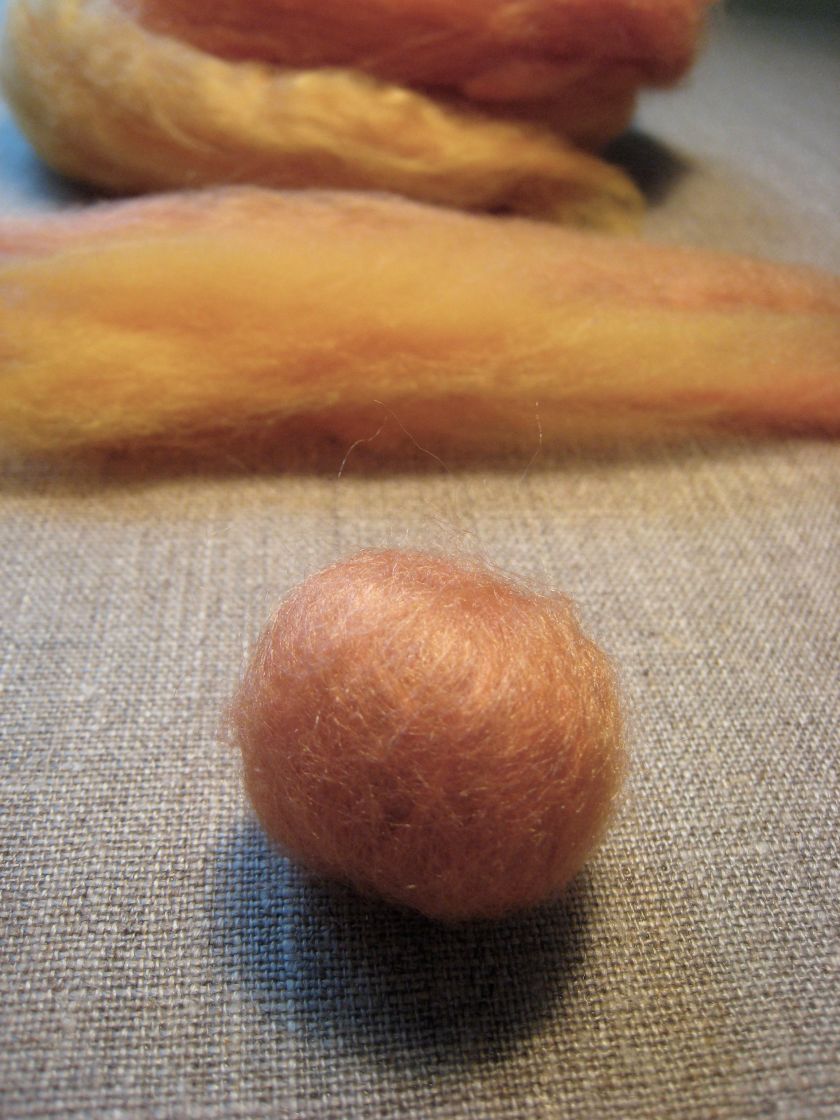
You will be surprised just how small a well felted pearl ends up. Roll up the wool evenly such that you do not have any obvious creases or folds. 

feltpearltutorial2

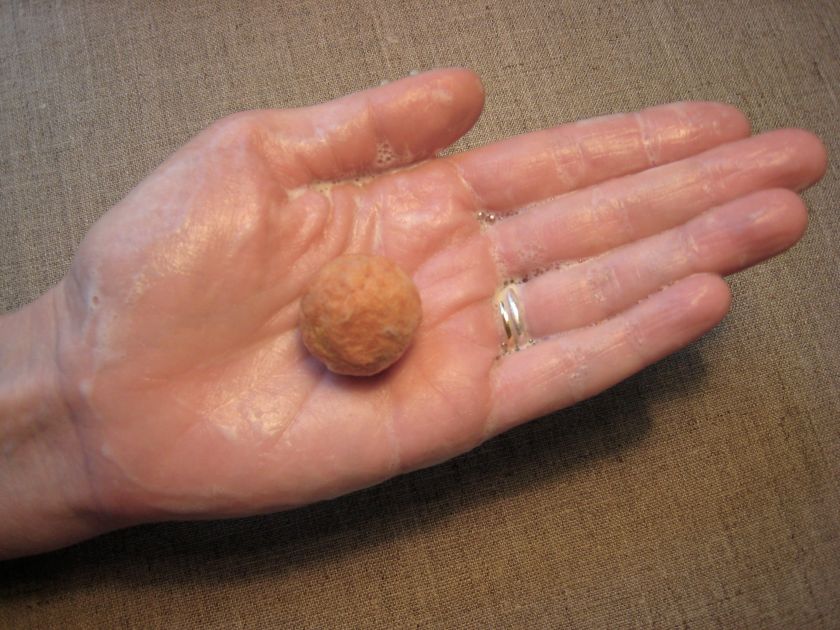
Using soap and warm water, gently roll the ball in your hands. Do not be too aggressive at first, as deep folds and creases will greatly affect the final outcome. 

feltpearltutorial3


As you roll the ball, you will feel it start to felt. Resist the urge to squeeze it, as the secret to getting a perfect pearl is going slow and gentle. 

feltpearltutorial4

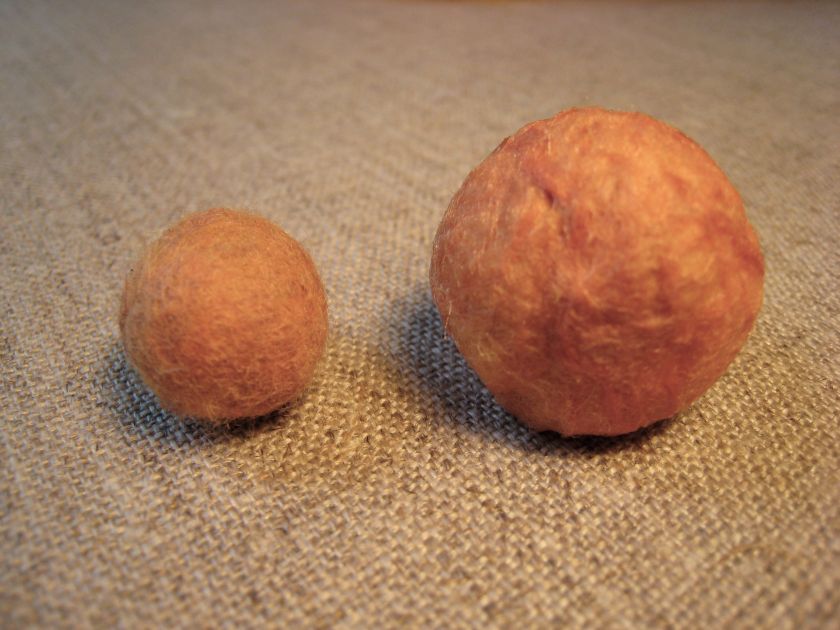
The ball will shrink considerably as it felts. In the above image, you can see the difference from the start of the felting process compared to a nice hard finished pearl.

Once the skin of the pearl is nice and firm, you can really go at it, felting it harder and harder. (Your palms will be the softest, cleanest palms on earth at this point!) When you feel that there is very little give on the pearl when pressed, you are done.  

Rinse and let dry. 

feltpearltutorial5

TIP:  if you are looking for an oval pearl, you can begin shaping in the final stages, by rolling it back and forth on a hard surface.)

Once dry, the silk will shine again, giving your pearl the luster that makes it so precious.

These can be used in a variety of projects. 

I would love to see what you make with yours.


Tutorial copyright Cynthia Reynolds Design 2009.

the workbench today – “felt-pearls” pt 2

earrings11

When I start a project, I usually have a very clear idea of what I am trying to accomplish. Some artists prefer to see their work take on a life of its own, only knowing at the end what the final product will be. I have a hard time working that way. Yes, details are often left to be decided on mid-process, like the finish on these earrings. My gut told me matt. but I was not sure.. I should learn to listen to my gut more often. It almost never fails me.

🙂

All that is left now is to make a pair of “felt pearls”  in the right size, made of merino wool and a touch of silk then set them securely on the embedded posts.

Meanwhile, more designs are running through my head. I need to keep a sketch book on hand. 

the workbench today – “felt-pearl” jewelry

silvereggshells2


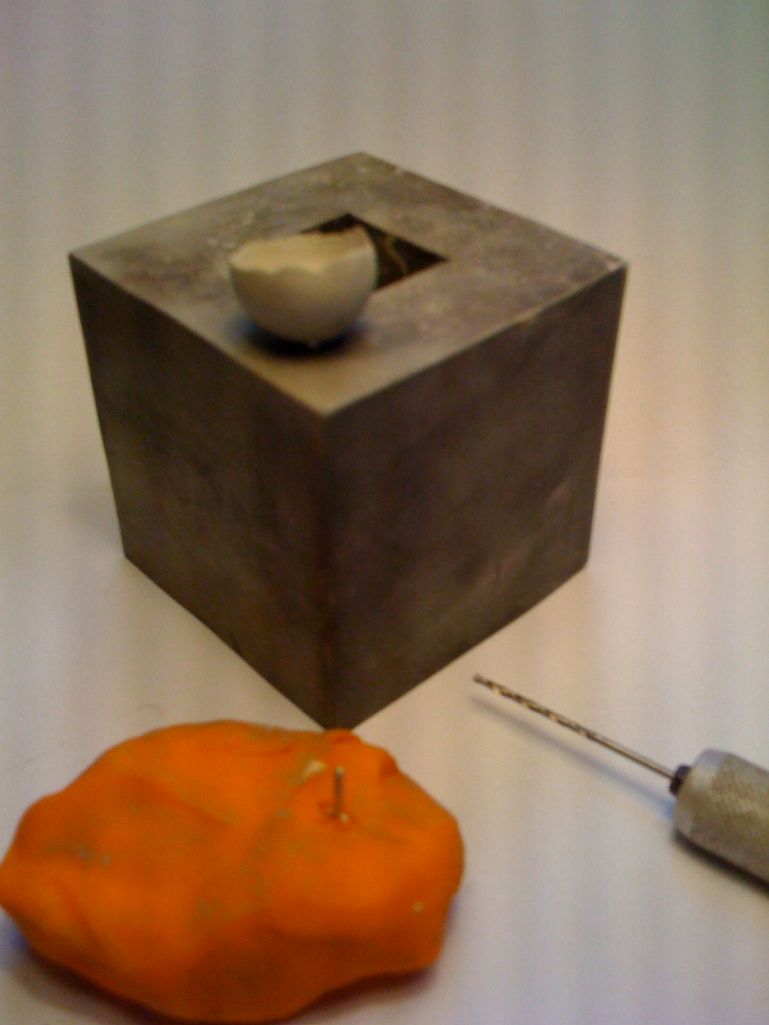
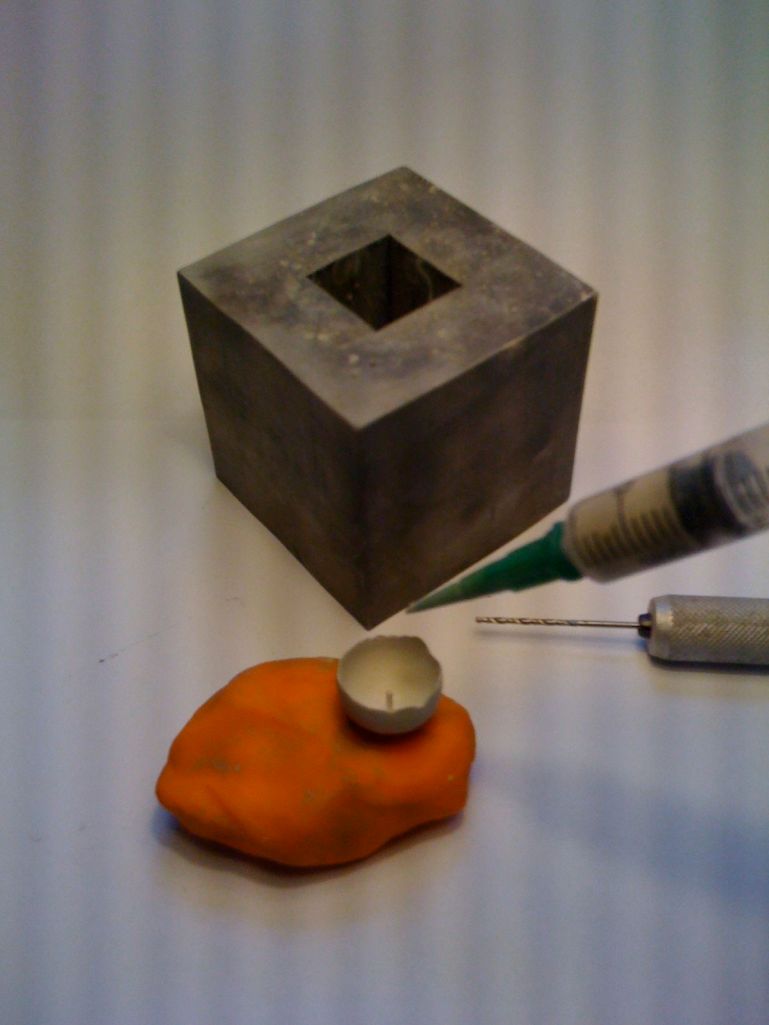
Sorry for the poor quality of this image. Taken one handed with my iphone – better than nothing! I will have to get into the habit of keeping a camera handy in the studio if I am going to be showing works-in-progress.

silvereggshells1

I am working on a line of silver and felt jewelry. One never knows how things will turn out, but I definitely have a vision of what I want. I am sculpting fine silver “egg shells” which will be turned into earrings set with a “felt pearl”.

I am still debating the finish of the silver, something tells me that a matte or brushed finish will suit this project more than a polished finish. Time will tell!

blogging

I have thought long and hard about blogging. I follow a variety of blogs covering a vast array of topics, ranging from design to metalsmithing, from felting to gocco printing. One thing I love is to come across a great tutorial that gives you a glimpse of the day to day workings of an artist. To see a work in progress is something that I cherish. Watching it come to life step by step.

I hope to be able to provide you with just that… a hint of what goes on in my day to day life making the things I love. Stay tuned for more…. and feel free to let me know what you might like to see!

FeltUnited

cynthia-reynolds-scarf1

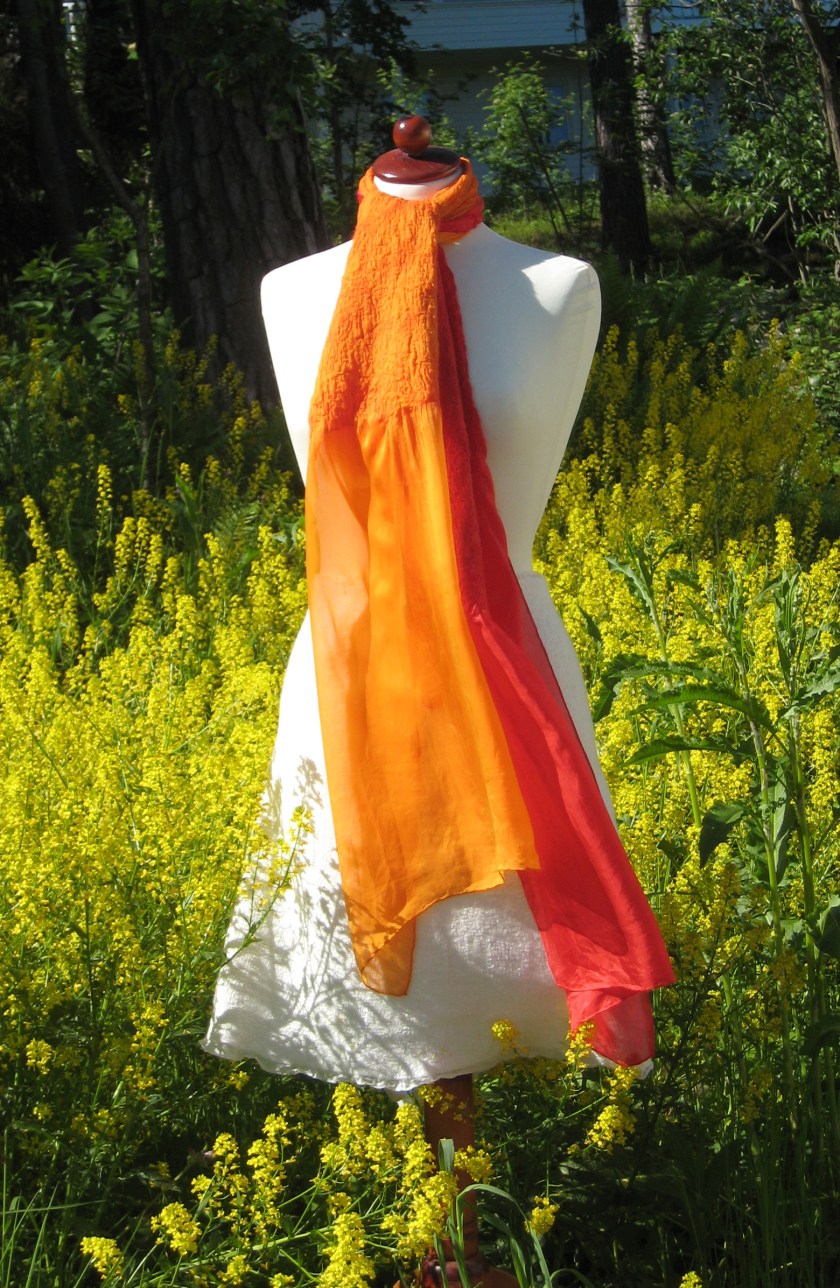
One of a series of pieces I have planned to celebrate the 1st International Day of Felt on October 3rd, 2009.

Elis and I have been working hard on FeltUnited, time in the studio to create has become a scarce commodity. In a few weeks, we will be spending some time in Holland felting together. I can hardly wait.