Latest Posts

Kiln fired enamel

Enamel – a fantastic way to bring some colour into what can often become a world of black and white when working with silver.
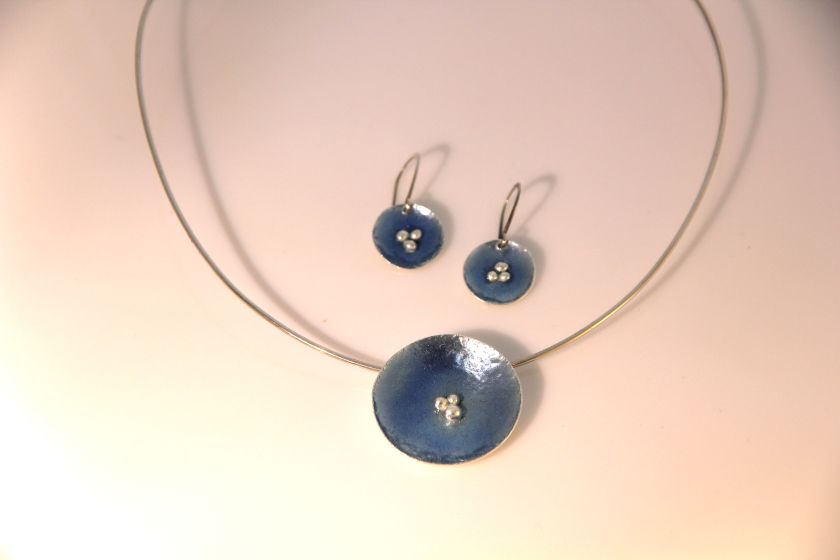
vitreous kiln fired enamel jewelry

This week, I have been testing a set of colours from Thompson Enamels – transparent/lead free for use on silver/copper/gold. Enamel is powdered glass which, when heated melts, flows and hardens to a smooth, durable vitreous coating on metal. Enameling can also be done on glass or porcelain, but requires enamels with a different COE (Coefficient Of Expansion) – expansion rates must be suited to the base surface material.

Prior to using enamels, they need to be washed to remove the “fines” – (extra fine particles which can cause your enamel to be cloudy).
This can either be done:
wet: by rinsing in water multiple times until the water runs clear
or dry: by using a series of sifting pans to separate the particle sizes (60, 80, 100 mesh etc.)
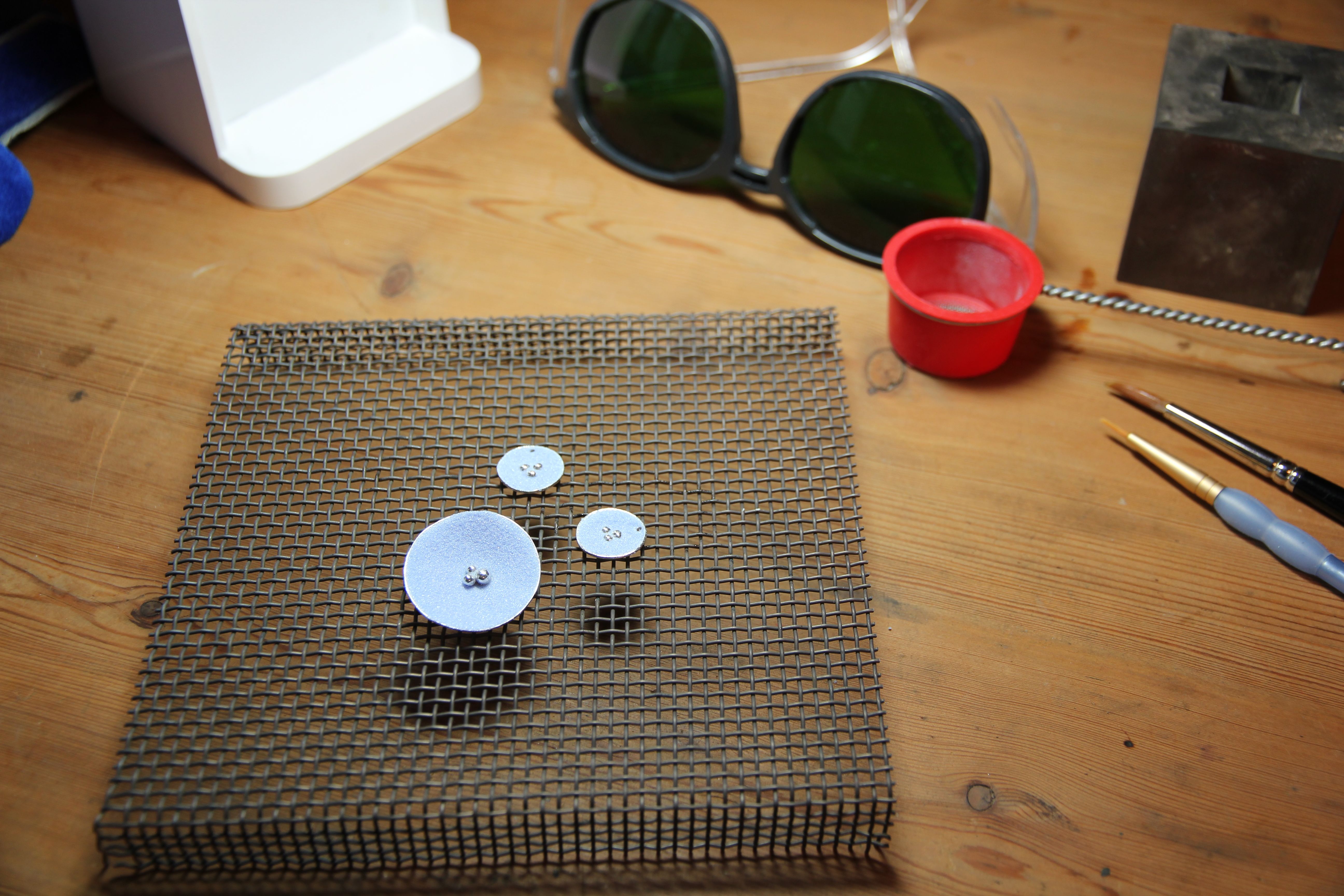
sifted enamel on silver – ready for the kiln

Regardless of which technique you plan on using to apply the enamel, the silver must be properly prepared, polished and cleaned to remove all traces of dirt and oils that would prohibit the fusing of the glass on the silver.

Dry sifting technique: To apply the powdered enamel, a mesh sifter is used to evenly distribute it across the surface. Depending on the piece, a holding medium can be used such as ‘Klyr-fire’ to help ‘glue’ the enamel  until firing. (Make sure the klyr-fire has dried prior to placing in the kiln).

Enamel can be fired with either a torch or a kiln. Torch firing, due to the fluctuations in temperature can cause uneven results and allow for the oxidation of the particles producing discoloration of the enamel. These effects are sometimes desirable for artists, but for my preference, kiln firing is the only way to go.
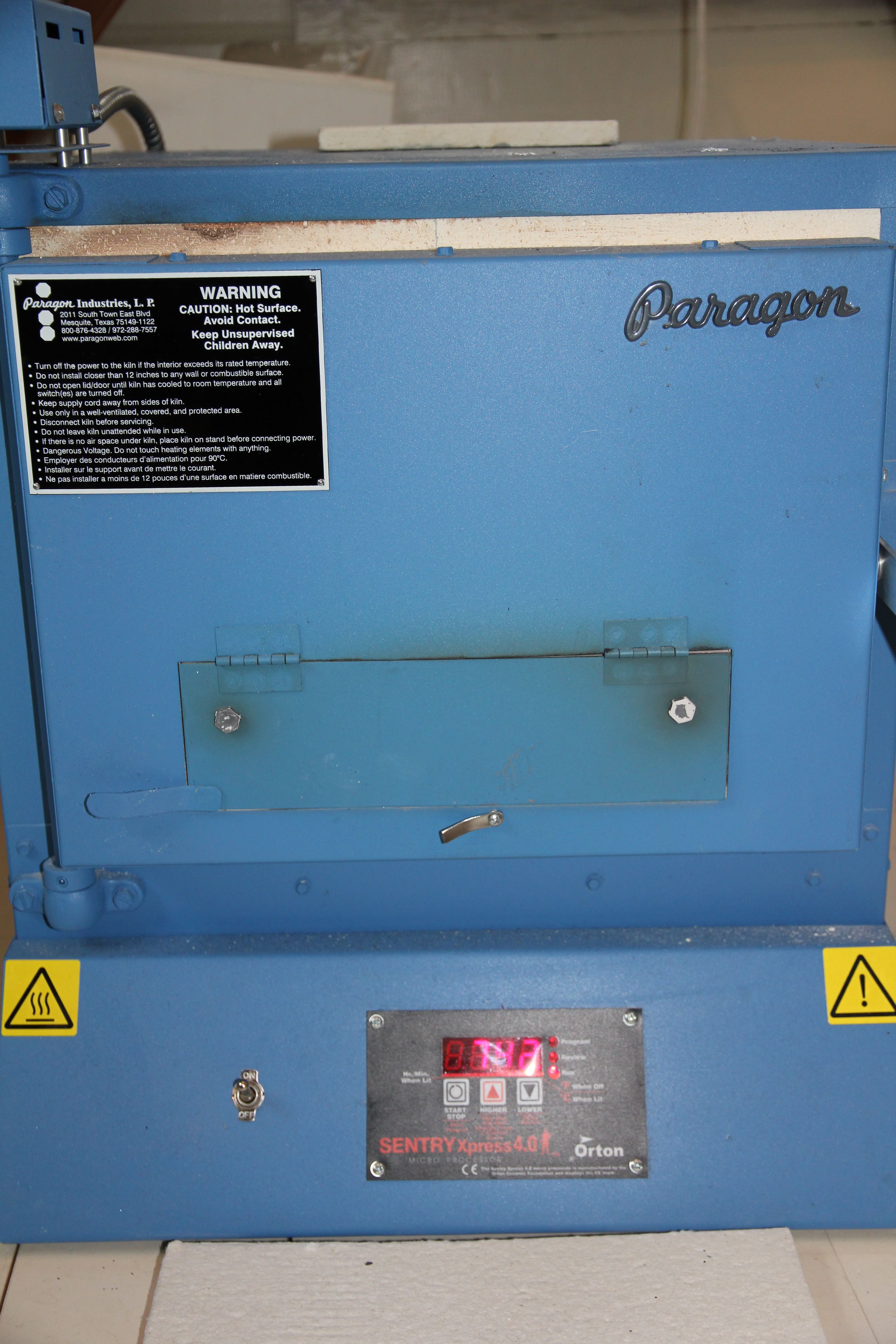
Paragon Xpress 14A kiln with bead/enameling door

Firing in a kiln produces an even heat (around 800 degrees celcius for enameling)  which engulfs the entire piece, which is unattainable when torch firing.

When I purchased my kiln, I knew that eventually enamel would find its way in to my repertoire of skills, so I selected a kiln with a bead/enamel door on the front which would allow me to have access to my work without opening the main door letting the heat escape. You would be amazed at how fast you can  drop down 100 degrees.

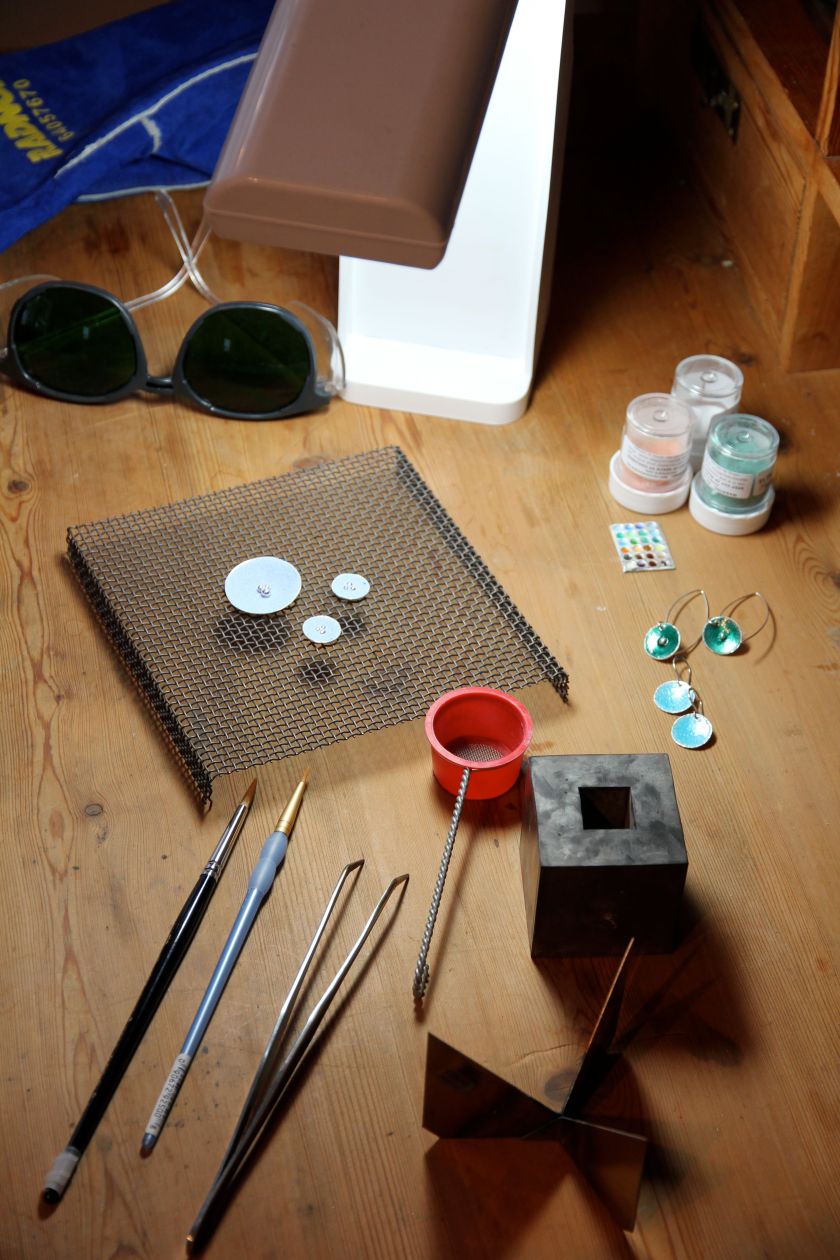
When using a kiln, certain safety precautions must be taken. Always have a non-flammable surface in front of your kiln door. Should you accidentally drop a piece of red hot metal it would be nice not to set fire to your studio. I use a Solderite pad which can withstand over 900 degrees. Use kiln gloves religiously.. (go ahead.. ask me why! – I am the queen of burns – you should see my left hand at the moment. Kitchen accident NOT studio accident).  And never look into your heated kiln without proper eye protection (you can burn your retina and cause permanent eye damage). The photos in this post were taken while I was wearing my green workglasses.
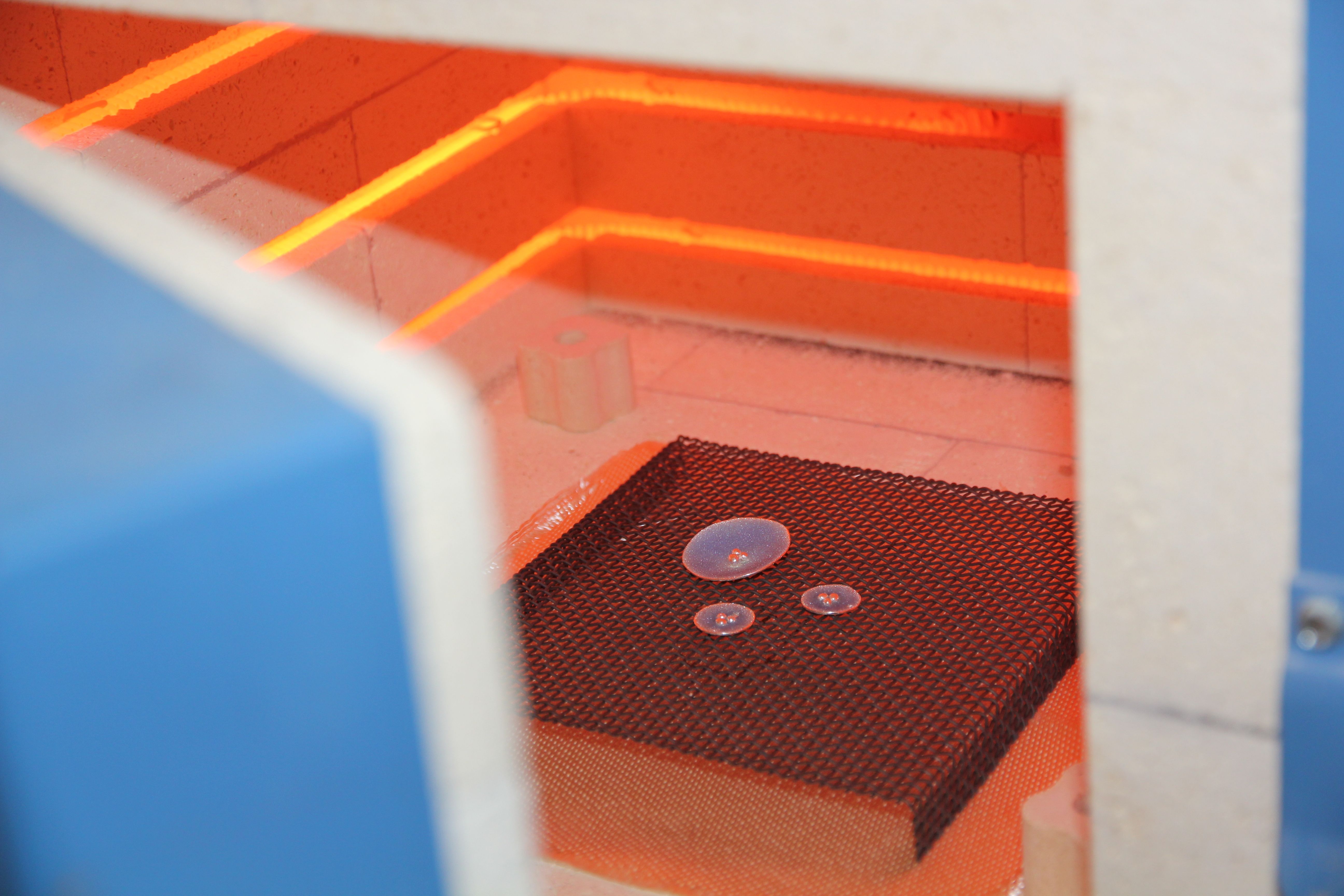
the setup

When enamelling, I cover my kiln floor with a fibreglass cloth to prevent any molten glass from sticking to the surface. a raised mesh metal stand  is used to support the pieces, and a kiln fork is used to place it in the kiln via the beaddoor.
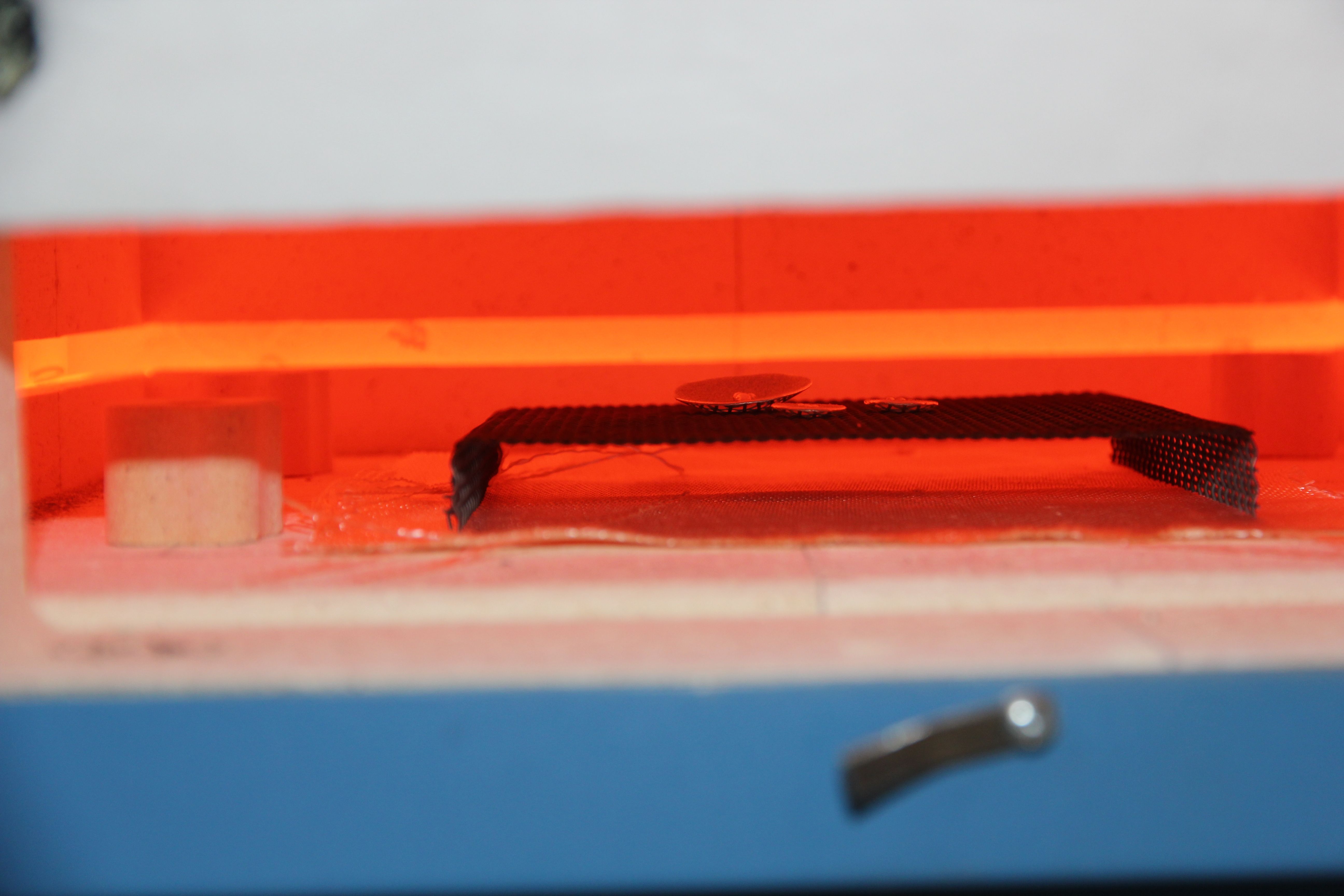
peeking through the beaddoor

Due to the variance in temperatures and firing times for the different colours, testing is important. What may take 2 minutes for one colour, could take 4 for the next. The best way to know is to watch for the signs.

Enamel goes through a variety of phases as it goes from powder to smooth glass; first comes the sugar stage, then the orange peel stage. As it passes this stage, one must watch to make sure that it does not overfire. This can cause separation and discolouration of the enamel.

Once done, remove from kiln. You will notice that as it cools, the colour will change. Do not quench your piece in water or the glass will shatter.

Then, you are done!
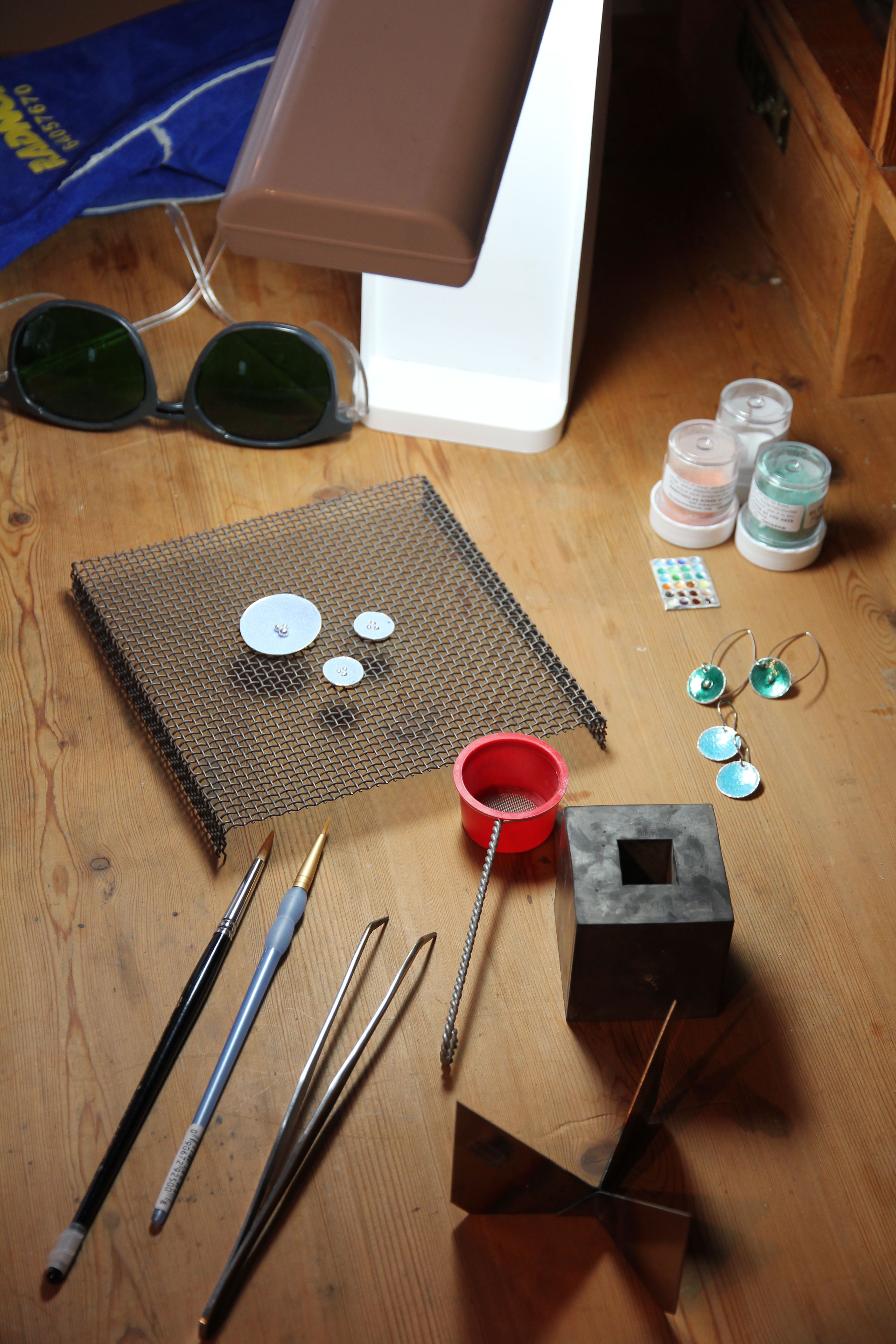
making samples.. and this set is for me!

NOTE: when buying enamel jewelry: The term ‘cold enamel’ does not refer to true glass enamel. It is a term that has surfaced in recent years in an effort to upscale what is essentially dyed resin – a mix, pour and set plastic.

the big picture

As most artists know all too well, November and December is the busy season, holiday sales carry many of us through the rest of our year. Months ago, as the end of summer approached, the deadline for deciding in which holiday shows to participate came up, and I had to make a decision. In past years I have had open studios, inviting the public in to my atelier to see how and where my products are made. Last year, I took part in the Designers Fair (juried entry) at DogA, the Norwegian Center for Design and Architecture on Hausmannsgate in Oslo, 10,000 people in 2 days – exhausting but worthwhile! This year, the invites for various shows came in and I realized that regardless of what options I chose, the workload would be pretty much the same, long hard days in the studio working on new series and collections, evenings back in the studio polishing silver or ironing textiles, display work, pricing, labeling, packaging supplies, being away from my children on the holiday weekends, and stressing out my poor husband!.. whom I have to say is the most supportive, adoring human being.. and by far the best man I have ever known, hmm.. can you tell I love him to bits! but I digress. October, for me, is dedicated to FeltUnited, it is a lot of work, and a labour of love; I usually roll straight into holiday production mode and life gets a little hectic right until January. Well this year, I have decided to take it a little slowly… and I am thrilled with my decision.
I turned 40 this year, and no.. no midlife crisis, I could not be happier with where I am in life. I simply did a little thinking, and realized that my children (4 & 7) will not be children forever… sometimes we have to look at our priorities and see the big picture. I am fortunate to have this option. I will always be an artist/designer/craftsperson (I couldn’t stop if I tried!) –  I carry a lot of titles, but none are as important as ‘Mom’. Being a parent is where it is at! Nothing is more fulfilling. So this year, I am focusing on family.

.. how am I doing that? Well, as I said, the artist in me is pretty hard to stifle. Inspired by the school work of my australian felt-friend Elizabeth Armstrong of FrostFair.  I have just come off of an entire week working with my son’s second grade class to produce a wall hanging as part of the Art and Culture Event. An amazing initiative where the school has put aside it’s regular curriculum and dedicated two entire weeks to immersing children in music, poetry, dance, art and more. This Thursday the school will host a ‘Culture Evening’ where all of the work will be presented, I am really looking forward to it. Events such as this, are near and dear to my heart. I have a true belief that the current school model (worldwide) needs an overhaul (or at least a good re-thinking). What was created in an effort to teach a population how to function in an industrial society has neglected to foster the natural creativity in our children – if anything, it suppresses their inherent abilities. Setting aside time for ‘The Arts’ is more valuable than most people realize. Many do not see the big picture.. that the Arts (in all of its variations) fosters creativity  (with the body and mind) that can be used in all aspects of life and education. It is creative thinking that sparks the passion that has produced the biggest breakthroughs in science and medicine. Technology?.. where we would be without the creative minds who ‘dreamed big’? Creativity.. it is the future, and if we teach our children that anything is possible… just imagine the possibilities! ok.. I am rambling on. Suffice it to say, I have had a solid week of quality time felting with children, all the while talking to them about how reading and math and the other skills they are learning in school today are all part of what I do as an artist every day. They were amazed… cross-curricular education through art – you just can’t go wrong with it.

If you have not seen the enlightening and humourous talk given by  Sir Ken Robinson at TED, about education and creative thinking, make yourself a cup of coffee and watch it. Worth every minute of your time!

– and for the Mom in me.. that week, spent with my son and his friends.. priceless!

Speaking of Moms. As some of you may know, I moved to Norway 10 years ago from Canada to be with the man of my dreams. I never looked back, but have, of course missed the close contact with my family. This year, my mother, who knows all to well how that is (she moved from Australia to Canada when she was 21) will be joining us here in Norway for the entire month of December, it is going to be lovely! An entire month of making presents, baking goodies, spending quality time with my family and enjoying all that life has to offer. I know I made the right decision.

and .. a final note in a somewhat discombobulated post: Remember to buy handmade this holiday season… for ohhh so many reasons ! You can read my post from last year about a Handmade Holiday right here.

Be well.

EDIT: As per usual, I always have selected works available in studio (most work never gets online) – you can also find items in my online shop, so feel free to contact me if you are looking for something special.

FeltUnited 2010 is online :)

Yesterday, Elis and I published the 2nd International FeltUnited Exhibit. What started two years ago as an idea to connect artists from around the planet in a joint exhibit, grew to be a worldwide happening celebrated in over 25 countries on 5 continents. Nearly 1000 photos have been compiled in two themed exhibits featuring artists of all skill levels, from new beginners to renowned textile artists; all brought together to celebrate a common passion. Do take a moment to make yourself a comforting beverage, turn on some nice music and watch the show.

We have also announced next years date and colour theme; RedPurpleBlue, our third and final segment of the colour wheel. Please join us October 1st, 2011, see FeltUnited for more details.

… and to Elis, thank you.. for everything. You are a dear friend, a fascinating artist and old soul, whom I am blessed to have in my life… I adore you.


EDIT: fixed the links 😉


my latest addition (obsession)

Sock knitting machines!.. ahh.. I know this may sound crazy, and quite honestly I was not sure as to whether this should go on my studio blog or not, as this is more of  a ‘me’ thing. so.. no.. I am not going into the sock making business.. (at least not as far as I know!)

(…continues below photo)

restored and purring like a kitten

Since first learning of these machines over a year ago, I have patiently (well.. my husband might disagree with that statement) been waiting for the right one to find me, during that time, I have read so much about them, and the history behind them appeals to me in a significant way.

In the late 1800’s and first half of the 1900’s, sock knitting machines were produced in many countries around the world. During war times, many wives/mothers were left at home, some struggling to make ends meet. the answer?.. the sock knitting machine. Women all over the world purchased these machines, and through the same company, purchased wool. After meeting company standards, they were in a position to sell their socks back to the company for a profit (a measly one I am sure) but a profit none the less. These machines, allowed women to work from home at their own pace and schedule, while still attending to the household and family needs. Those options were often few and far between. These machines offered women some independence, in a time when that was not common.

Last week, I contacted a gentleman who was selling one that had belonged to his great-grandmother. I just knew that this was the one for me! When asking about who had owned it, he told me that his great-grandmother, who had lived on the west coast of Norway, had been widowed early, and that this machine helped her keep her family afloat. It had been packed away in a chest in the mid 40s, and nobody had touched it since. So a few days ago, I went to pick it up.. and to my surprise, it had 3 set of cylinders with corresponding ribbers, some with knitting still on them. All of the pieces were there, and with a little tender loving care, I knew I could breath some life back into this beauty.  I was giddy.. like a kid in a candy shop.. just giddy!

Upon coming home, I started to unpack all of the little packages… meticulously wrapped sets of spare needles, lustrous silk on bobbins, packaging from awool distributor (the predecessor to the company I now order from!) and an envelope. .. well.. the envelope… I poured myself a glass of wine, and tried to take it all in, deciphering handwriting and understanding the notes and handwritten charts with sizing information…. the more I read, the more I realized that the woman who owned and used this machine was not simply a woman who knit socks. She was a skilled artist, who used her equipment to the fullest of its potential. Her attention to detail and systematic approach to what she made is impressive in this day and age, let alone 80 years ago. Small sketches of garments, women’s sweaters, a child’s swimsuit, all with detailed instructions. I am in awe, and somewhat humbled..and honored to bring this small piece of history back to life.


notes by an artist in the 30s


Here is a before shot. I took apart every piece, slowly.. so I could remember how to reassemble it! Each needle latch has now been oiled, all the old lint carefully removed. It is just a lovely lovely thing! and now.. I need to teach myself how to make heels and toes on some scrap yarn before moving ahead and using my hand spun/dyed luxury fibres to make myself (and some loved ones) some decadent socks!.. think indigo dyed silk and cashmere.. ahhhhh.. I can hardly wait:)

before.. with knitting still attached – wool– there is nothing like it!


We Felt United :)

Yesterday was the big day.. FeltUnited was celebrated around the world, as felters everywhere shared in their love of wool. Photos are streaming in, and I am in awe of how many joined in on the fun. Chile, Australia, Argentina, Germany, Russia.. the list goes on. Events ranged from large to small, some organized workshops, others decorated public statues, groups marched through city streets boldly wearing this years colour theme… and many hung a symbolic piece on their fence post; and in the meaning of the event, they Felt United.

So now the work begins for Elis and I, as we sift through the submissions and try to find some order in it all before posting the exhibit.  Stay tuned.

cochineal and shibori

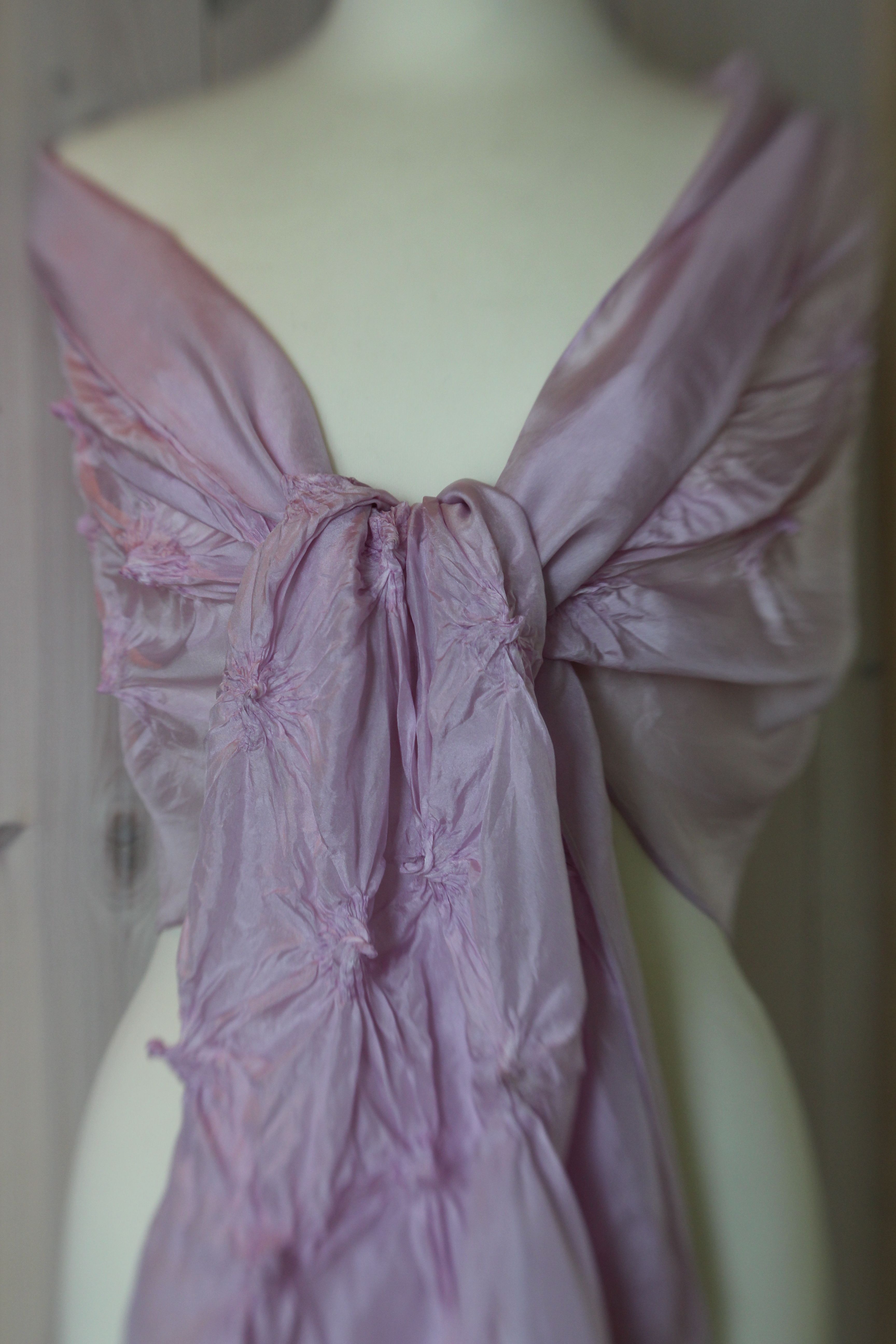
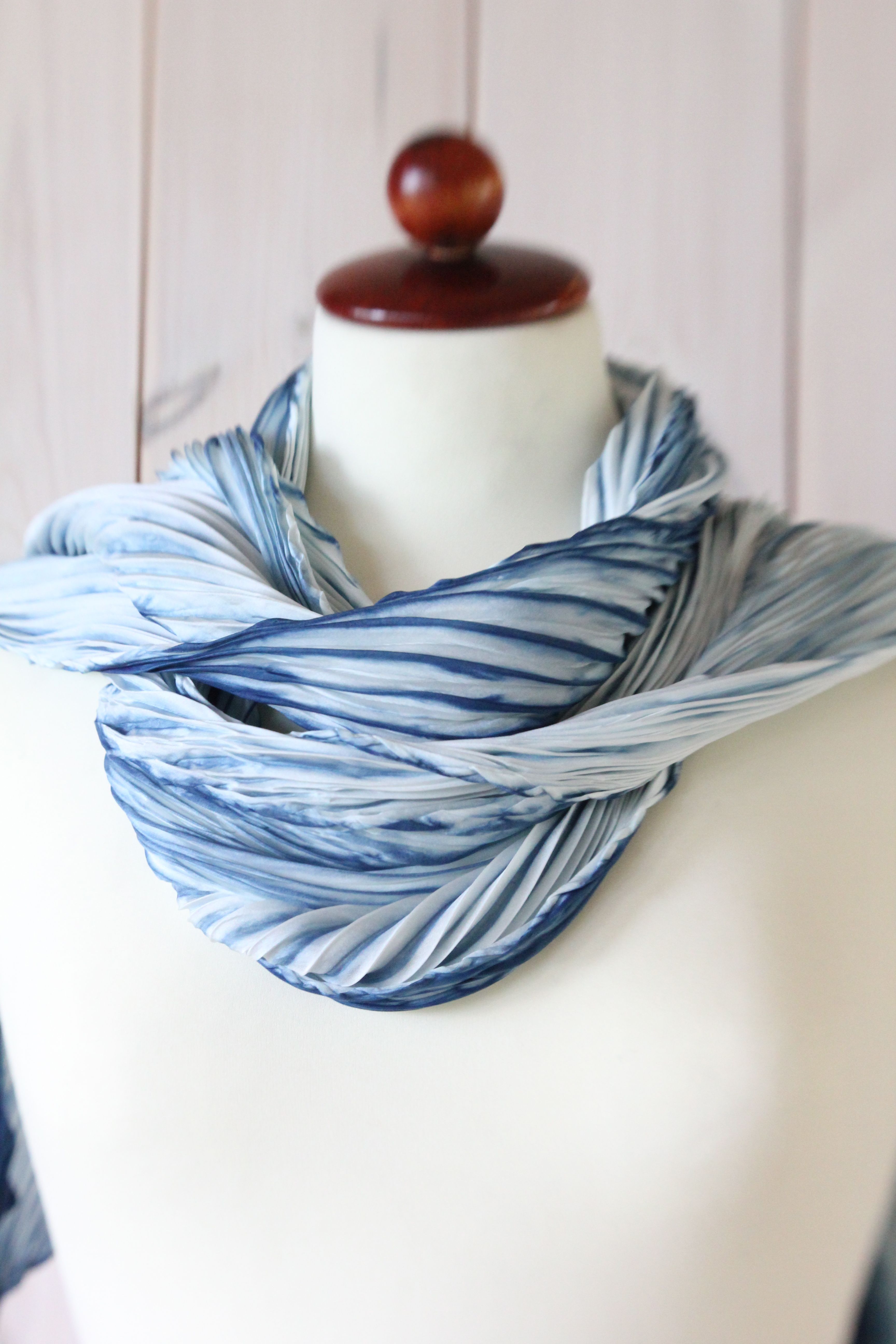
cochineal dyed shibori silk shawl

but where does it come from?

cochineal bugs before grinding

Bugs. Yes, little scaly bugs that live on prickly pear cacti in the desert. Once dried and ground up to a fine powder (I use an old coffee grinder). These little critters give off the most stunning colours from the palest, softest pinks to the deepest crimson.

Shibori shawl symmetrically bound and ready for dyeing

I ground my bugs a few days ago, and brought them to a near-boil then left to cool for 24 hours. During which time their colour releases to create a deep crimson liquid. I strained it through a silk lined sieve and saved the ‘pulp’ to try and use again.

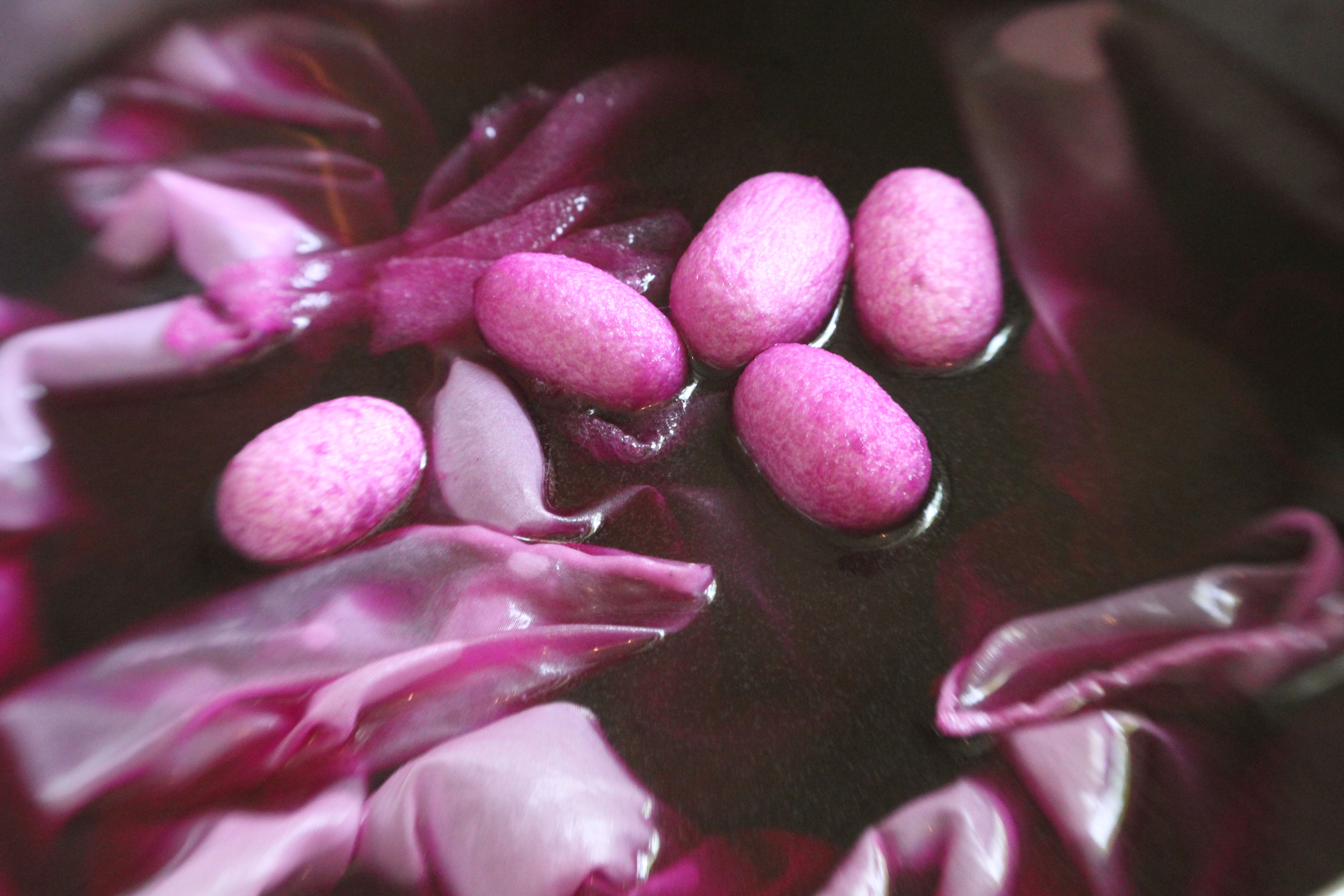
the cochineal dye bath

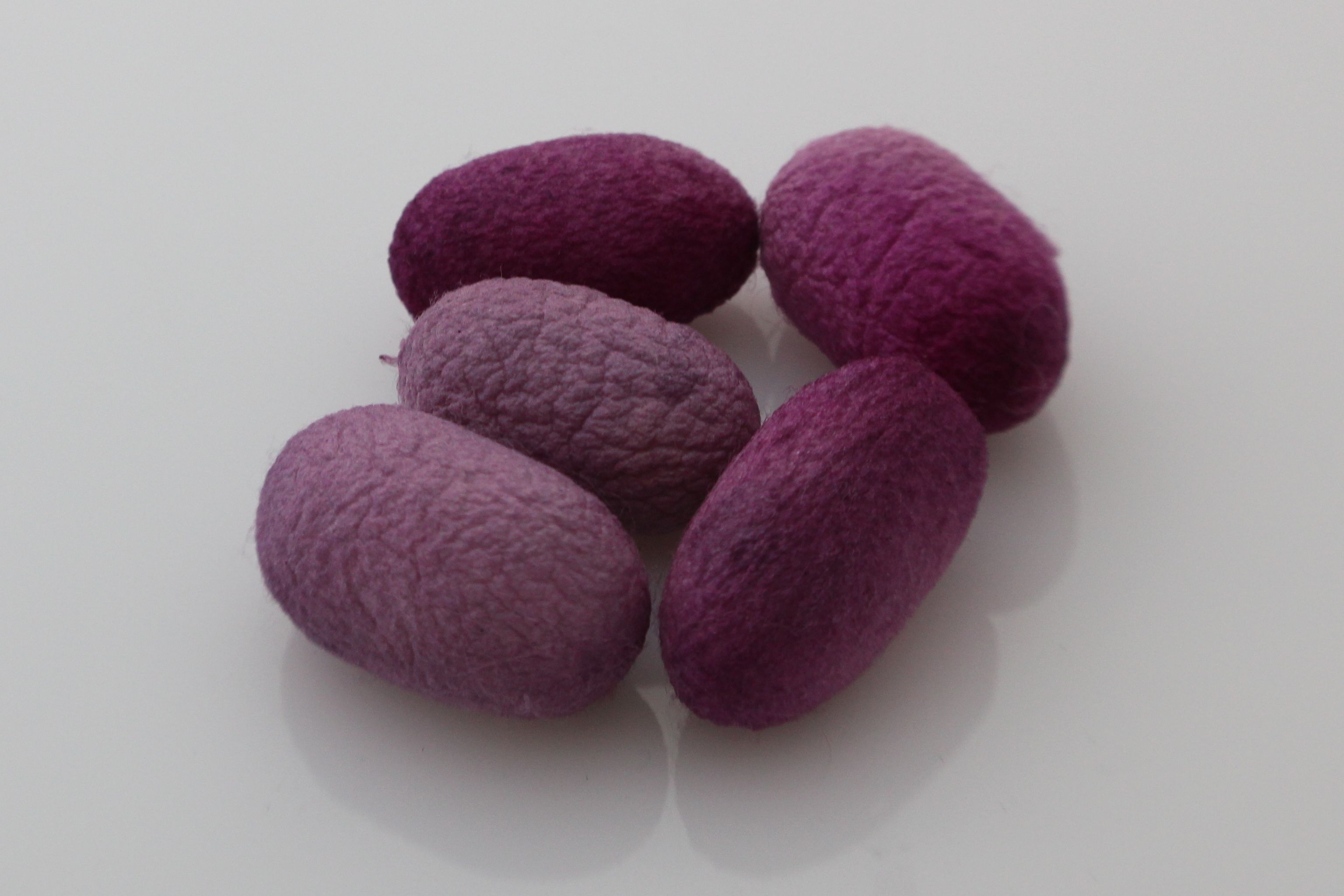
Cochineal will produce a variety of colours dependant on the mordant used. In this dye bath, I used Alum. I tossed in a few silk cocoons, as they make such a lovely colour reference, and will surely be used in a project one day.

with few silk cocoons floating around

Once I had the colour I was looking for, I rinsed and centrifuged the silk and let is dry.

the bound silk after dyeing.. not to be undone before it is bone dry

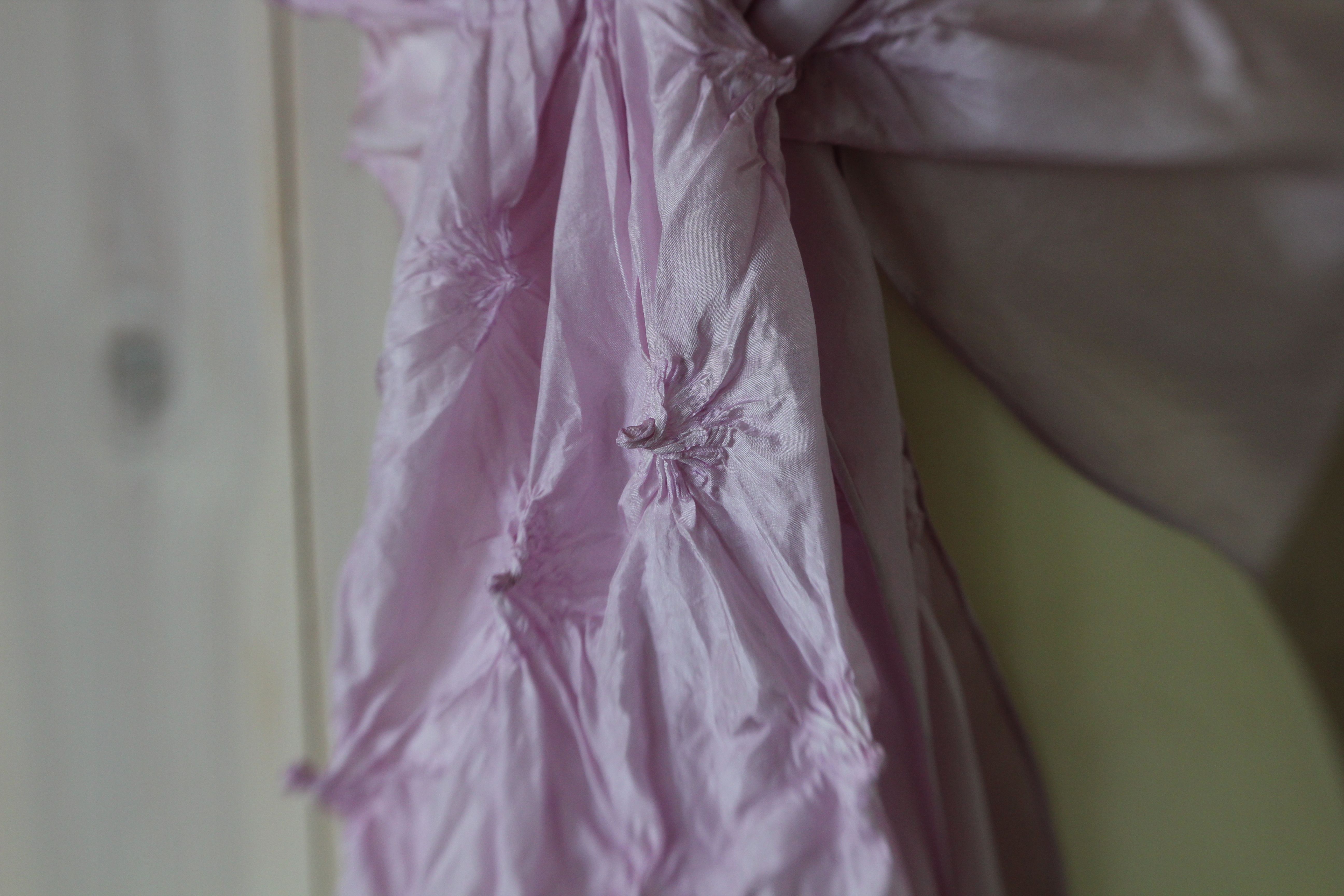
After drying completely, I undid the resists and carefully pressed it to retain the shibori texture.

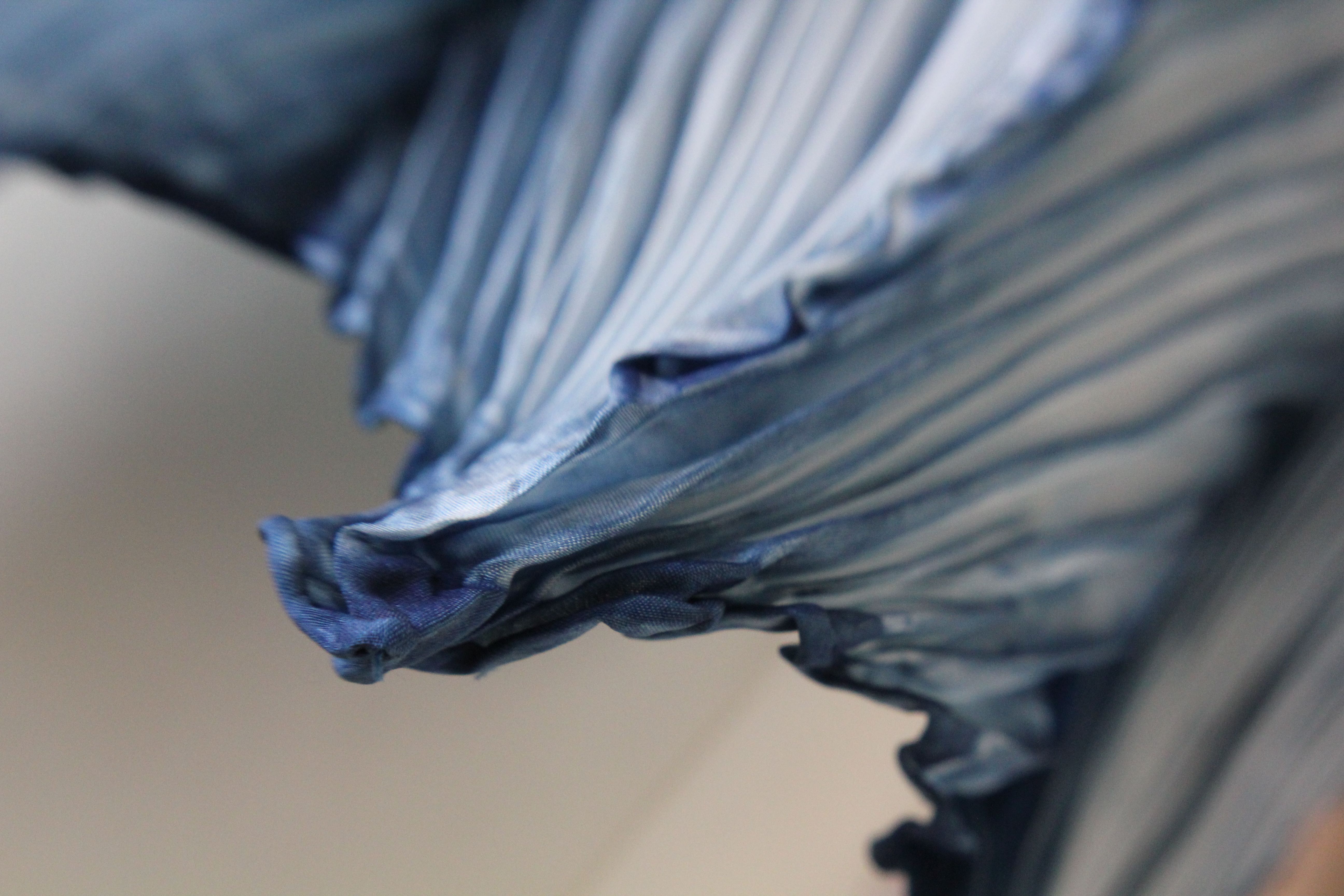
Shibori detail

a combination of soft colour and striking texture – pure luxury

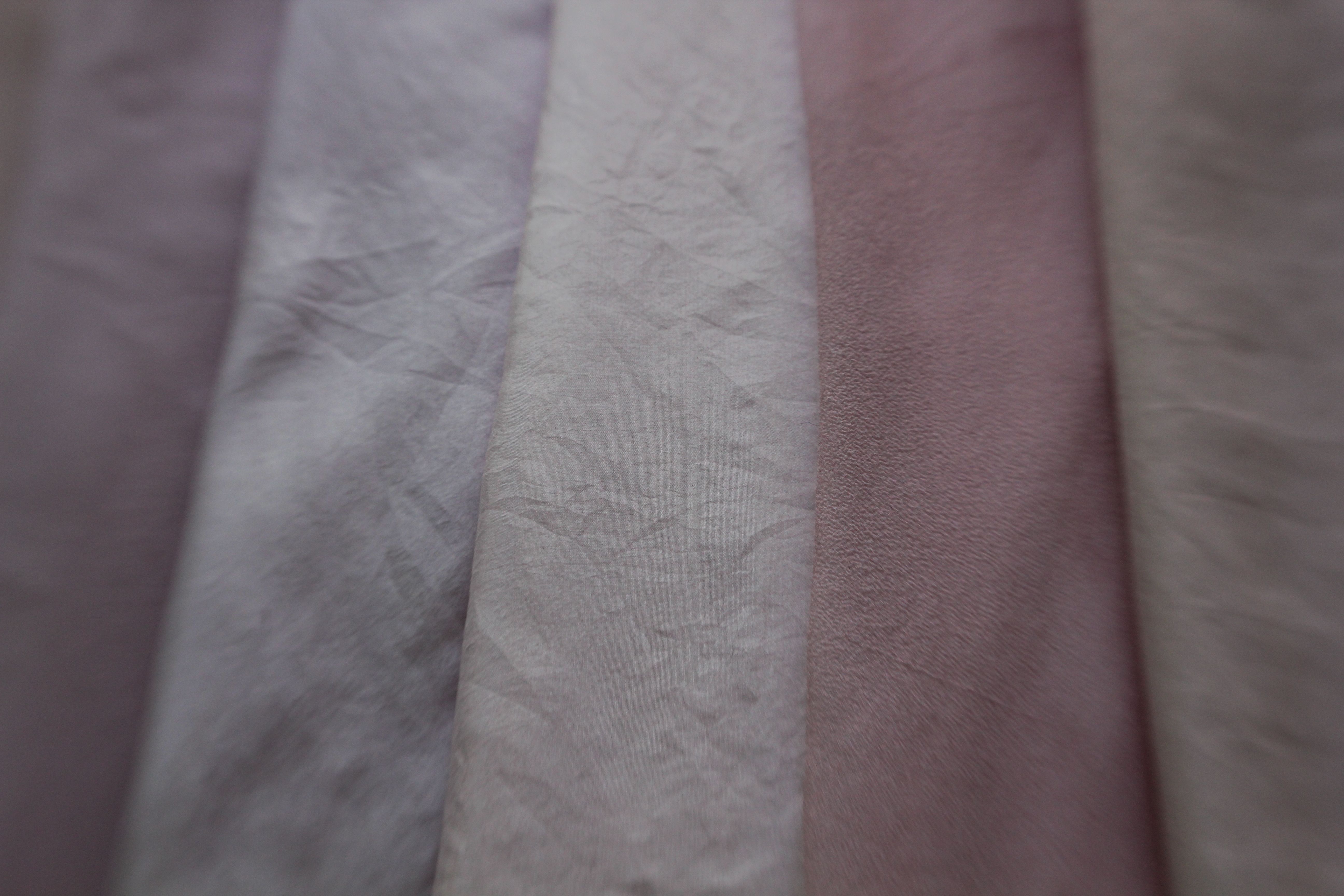
After removing this shawl from the dye bath, I experimented with different fabrics and fibres, as well as adding tartaric acid to yield more colour, resulting in varying shades. Other mordants can be used to vary the tone such as tin. An afterbath in amonia will tend toward more purple than pink. And Iron will make it more earthy, but note that the silk fibres can be damaged by iron.

varying shades of pale cochineal

silk cocoons & cochineal from pale to deep

If you are interested in a good reference book re: natural dyeing, try Indigo Madder and Marigold  by Trudy Van Stralen.